

Janiculum Hill
Last updated on October 4, 2026Why visit Janiculum Hill
The draw
It is the view, and the reference work says so without hedging: the Janiculum is one of the best locations for a scenic view of central Rome with its domes and bell towers. It is also the second-tallest hill in the modern city after Monte Mario — and not one of the Seven Hills, because it is west of the Tiber and outside the boundaries of the ancient city. The best view of Rome is from a hill Rome does not count.
And it was always a place for looking from. It was a centre for the cult of the god Janus, and its position overlooking the city made it a good place for augurs to observe the auspices. People have been coming up here to look at Rome and draw conclusions for about two and a half thousand years.
The friction
It is a climb, and there is nothing at the top but the view. The hill is mostly occupied by foreign research institutions — the American and Spanish Academies — plus The American University of Rome, the Pontifical Urban University, the Pontifical North American College and Palazzo Montorio, residence of the Ambassadors of Spain. Those are workplaces and residences, not sights. You come up for a terrace and you leave.
The tactic
Do the two things that are not the view, because they are both small and both easy to walk past. Bramante's Tempietto, at San Pietro in Montorio, marks what was formerly thought to be the site of Saint Peter's crucifixion — a shrine in a courtyard, and one of the most copied buildings in Europe. And the Villa Lante al Gianicolo, by Giulio Romano, 1520–21, is an important early building by the Mannerist master.
Then go down into the garden rather than straight back to the river. Turismo Roma gives the Orto Botanico as one of the largest in Italy, 12 hectares, preserving varieties from all over the world — and the fact that reframes the whole hillside: its first director, Pietro Romualdo Pirotta, in post 1884 to 1928, created the entire naturalistic area from scratch, on a site that at the start held only the ancient wood against the Janiculum and two cedars of Lebanon. The wooded slope you have been admiring is one man's planting plan.
Skip it if you:
- Cannot manage a sustained climb. The hill is the attraction and the gradient is the hill.
- Want things to go into. Most of what is up here is an academy, a college or an embassy residence.
- Are chasing ancient Rome. It is outside the ancient city, which is the whole reason it is not one of the Seven.
Quick facts
- Type: Nature, City Park
- Visitor access: Open to visitors
- Admission: Free
Visit responsibly
Most of this hill is somebody's workplace or home. The summit is largely foreign research institutions — the American and Spanish Academies in Rome — plus The American University of Rome, the Pontifical Urban University, the Pontifical North American College and Palazzo Montorio, residence of the Ambassadors of Spain. Gates and driveways here are not entrances.
The wood is a scientific collection, not a park. The Orto Botanico's 12 hectares hold over 300 specimens more than a century old belonging to over 130 species, arranged as a scenographic reconstruction of environments. Staying on the paths matters more in a planted collection than in a wood, because the arrangement is the exhibit.
Nothing you are looking at is self-sown. The whole naturalistic area was created from scratch by Pietro Romualdo Pirotta between 1884 and 1928, from an ancient wood and two cedars of Lebanon. A hundred and forty years of continuous work is what the slope is.
The terrace is a road. It is the city's main viewpoint and also a through route, used by residents and by traffic.
San Pietro in Montorio is a church and the Tempietto is in its courtyard. Normal church manners, and quiet in a very small space.
Where it is
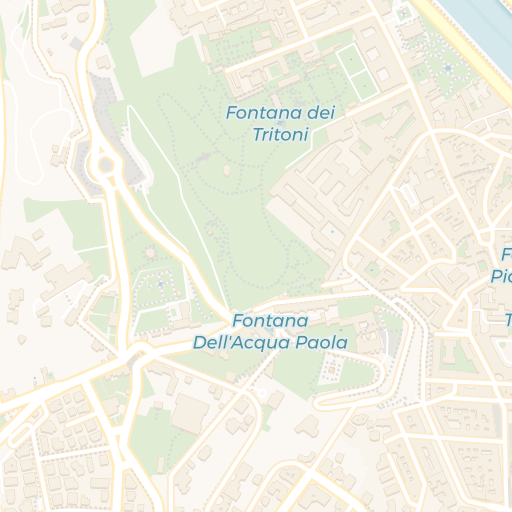
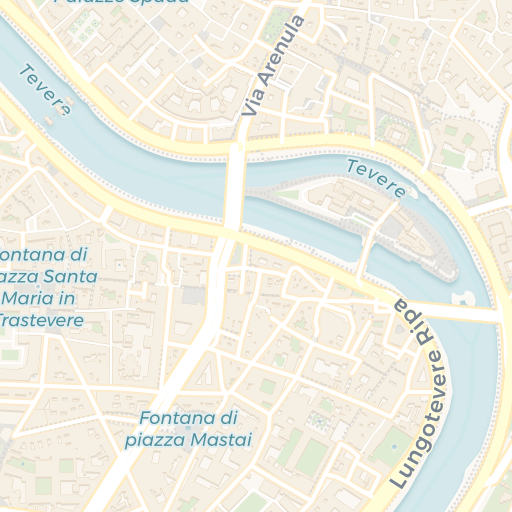
Get directions Open in Apple Maps
© OpenStreetMap contributors · © CARTO · 41.89157, 12.46116
Plan your visit
Admission: Free · Free public hilltop park/viewpoint
The hill is open; the garden is the ticketed part
The Janiculum is a public hillside with roads, a terrace walk and viewpoints, none of which has a gate. No authority reachable for this page publishes opening hours or an admission price for the hill itself, and this page does not invent either — what is published is for the sites on it.
The Orto Botanico
Turismo Roma places it between Via della Lungara and the Janiculum, in the park of Villa Corsini, once the residence of Christina of Sweden, and partly on the archaeological area called the Horti Getae, anciently occupied by the baths of Septimius Severus. It is one of the largest in Italy, runs to 12 hectares, and preserves plant varieties from all over the world. It is a working university garden with its own ticket desk, so confirm its hours before climbing down to it.
What is free
The view, which is the reason most people come. The terrace along the top is public road and public walk. So is the Fontana dell'Acqua Paola, which you pass on the way up.
What is not a visit
Most of the summit is occupied by foreign research institutions — the American and Spanish Academies in Rome — along with The American University of Rome, the Pontifical Urban University, the Pontifical North American College and Palazzo Montorio, residence of the Ambassadors of Spain. These are workplaces and residences and are not open to visitors.
How long
An hour for the climb, the terrace and the fountain; two if you add the garden.
Verified against Turismo Roma, October 2026.
When to visit
Late afternoon, and it is not close. The Janiculum faces east across the Tiber at the whole historic centre, so the low sun behind you lights the domes and bell towers the reference work sends you up here for. In the morning you are looking into the light.
Early morning is the alternative if you want it empty rather than lit — the terrace is a public road and it carries almost nobody before about eight.
Plan the garden separately from the view. The Orto Botanico is a university garden at the bottom of the eastern slope, with its own entrance on the Lungara and its own hours, so it is not something to fold into a sunset walk along the top. Its 12 hectares and over 300 trees more than a century old need their own hour.
Spring and autumn suit the climb. The hill is a sustained ascent with little shade on the road, and the garden — being planted as a scenographic reconstruction of environments — reads best when things are in leaf or turning.
Avoid planning around the institutions. The academies, universities and the Spanish ambassadorial residence that occupy most of the summit keep their own calendars and are not visitor sites, so there is nothing on the hill whose opening hours should shape your day except the garden.