

Piazza Navona
Last updated on October 4, 2026Why visit Piazza Navona
The draw
It is the only Roman stadium you can walk the floor of. Turismo Roma is explicit that the square is bounded by the buildings that rose on the remains of the Stadium of Domitian, and that the track's shape and dimensions are preserved — the present outline faithfully imitates the ancient perimeter. The reference work puts that arena at roughly 275 by 106 metres, seating about 30,000, with the outer benches 30 metres above ground. Stand at one end and look down: that is the length of the track. The Colosseum you pay to walk around the edge of. This one you cross for free, eating an ice cream.
The friction
It is one of the most worked tourist pitches in Rome. The square is ringed by restaurants whose terraces occupy the best of it, and by portraitists and sellers working the crowd. In high season the middle of the day is a slow-moving press of people, and the three fountains — the thing you came for — each have a ring of raised phones around them.
The tactic
Go and look at the floor of the stadium, then come back and read the fountain. Turismo Roma records that the remains sit 5 to 6 metres below today's street level and can still be seen under a modern building in Piazza di Tor Sanguigna — the north corner, two minutes away — and in the basement of Sant'Agnese in Agone on the square itself. Seeing the real floor at its real depth is what makes the piazza's shape legible.
Then give the Fontana dei Quattro Fiumi five minutes instead of thirty seconds. The Nile's head is veiled, and the reference work states plainly why: nobody at the time knew where the Nile's source was. The Rio de la Plata sits on a pile of coins — plata is silver — and looks frightened of a snake. The Danube reaches out to touch the pope's coat of arms, being the great river nearest Rome. It is a 17th-century world map with its own anxieties carved into it.
Skip it if you:
- Want to eat well. The terraces here are priced for the view, and Campo de' Fiori and the lanes behind both do better.
- Are here at midday in August. Open, paved, and at its busiest.
- Expect the stadium to be on show. The square is the evidence; the structure is underground and under buildings.
Quick facts
- Type: Historic Place, Square/Plazza
- Visitor access: Open to visitors
Visit responsibly
Do not get into the fountains, and this square has the reason. In the early hours of 3 September 2011 a vandal climbed into the Fontana del Moro with a large rock and decapitated several of its figures. The sculpture he damaged was Giacomo della Porta's, of 1575, with a figure added by Bernini in 1673. Climbing on a fountain rim is not that — but it is the behaviour that makes it necessary to police the difference, and it is why wardens here move quickly.
The square is a floor, not a seat. There is very little public seating by design, which pushes people onto fountain rims and monument steps. Both are protected, and both are where the fines are given.
Palazzo Pamphilj is an embassy. It has housed the embassy of Brazil since 1960. The Borromini gallery inside is not a public gallery, and the building is working diplomatic premises rather than a sight.
Sant'Agnese in Agone is a church in use. Normal church manners apply — covered shoulders and knees, quiet, and no flash during a service.
Buy away from the rim. The square's edge is the most expensive ground in the neighbourhood and the least connected to it. Spending in the lanes behind puts the money into businesses that are not simply renting the view.
Where it is
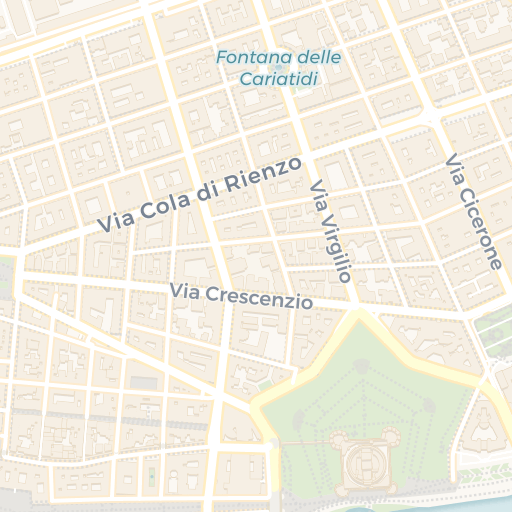
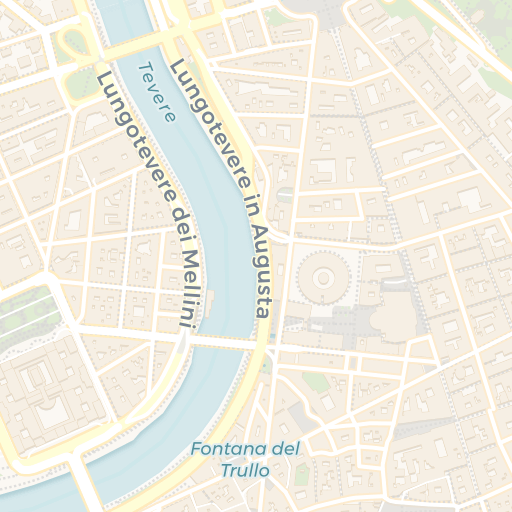
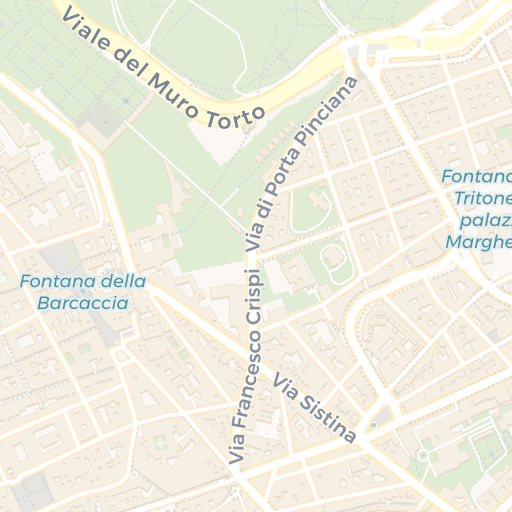
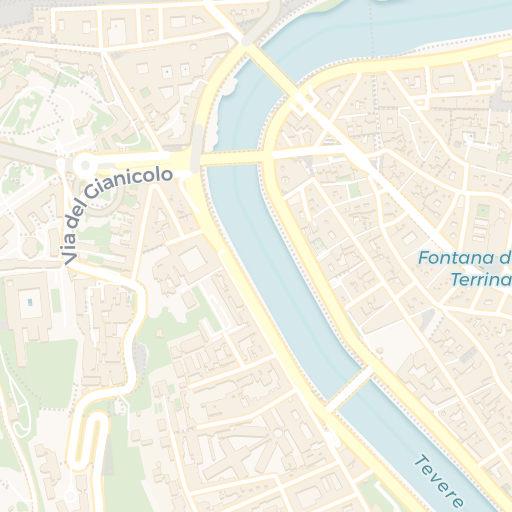
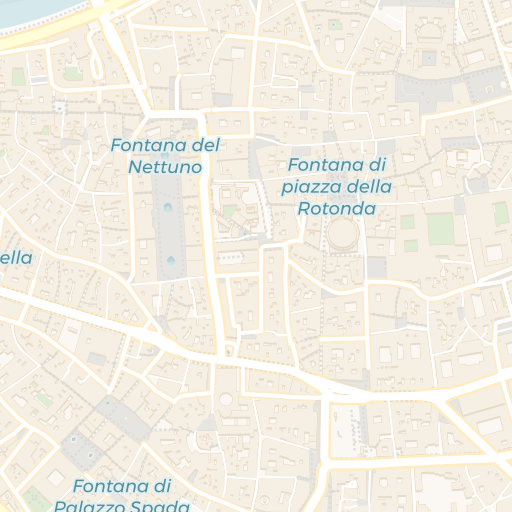
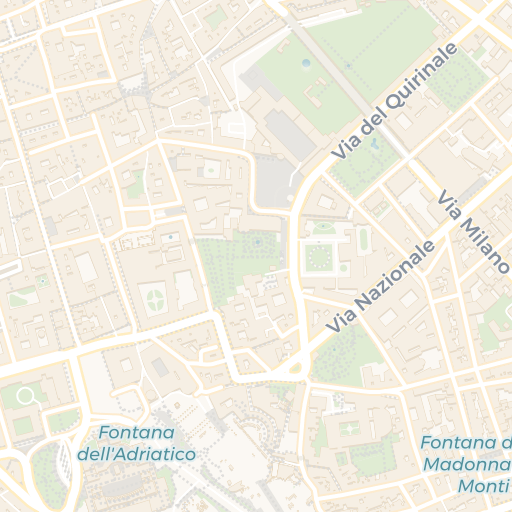
Get directions Open in Apple Maps
© OpenStreetMap contributors · © CARTO · 41.89893, 12.47312
Plan your visit
Free, open, and never closed
Piazza Navona is a public square. Turismo Roma lists it among the city's monuments with an address and coordinates and no opening hours and no admission price, because there is no gate to open and nothing to buy a ticket for. You can cross it at four in the morning.
Admission
Free. All three fountains, the whole length of the square, at any hour.
What is free that people pay for elsewhere
The best of what is here costs nothing and most visitors spend four minutes on it. The Fontana dei Quattro Fiumi rewards a slow circuit — it is carved to be read from all four sides, and the grotto with four openings means you can see daylight through the rock.
Turismo Roma also records where you can see the thing the square is made of: the stadium remains, 5 to 6 metres below street level, under a modern building in Piazza di Tor Sanguigna at the north corner, and in the basement of Sant'Agnese in Agone on the square itself.
What costs money
The terraces. The square is ringed by restaurants and cafés whose tables take up its edges, priced for the position. Nothing obliges you to sit at one, and the lanes immediately behind the square are better value.
How long
Thirty to forty minutes to walk the length, read the central fountain properly and look into both end basins. Longer if you go and find the stadium floor.
Verified against Turismo Roma, October 2026.
When to visit
Early morning is the only time the shape is visible. The piazza reads as a stadium when it is empty and you can see from one end to the other; by mid-morning the terraces, the stalls and the crowd have broken the floor up and it reads as a street. Before about eight you have it more or less to yourself, and the low light across the travertine reef is the best the central fountain gets.
Avoid the middle of the day in high season. It is open and paved with almost no shade, and the central fountain acquires a permanent ring of people around it.
Evening is the other good hour. The fountains are lit, the facades hold the light, and the square shifts from sightseeing to walking — Romans and visitors both, which is what the square has been for since the market arrived in the late 15th century.
August has a ghost. From 1652 until 1866, every Saturday and Sunday in August, the square was deliberately flooded — Turismo Roma notes it then had a concave floor, and that the water was there to give Romans relief from the heat. The pavement was raised in the 19th century and nothing of the kind happens now, so an August Saturday is simply hot. Knowing what used to happen on that exact day is worth more than the shade you will not find.