

Trastevere
Last updated on October 5, 2026Why visit Trastevere
The draw
It is the largest rione in Rome, and it holds its own version of the city. The name is trans Tiberim, the Augustan regio: beyond the Tiber. The city's own description is the place where visitors and Romans alike find the atmosphere of the Rome of former times among tangled lanes and characteristic squares, in trattorie and osterie cooking the traditional recipes, and in artisan workshops and family-run shops.
And the rione runs further than its reputation. Its boundaries reach the Gianicolense and Aurelian walls, which puts the Gianicolo inside it: a double view over the historic centre and over the dome of St Peter's, Bramante's Tempietto at San Pietro in Montorio — made presumably between 1502 and 1509, by tradition on the spot where Saint Peter was crucified — and the cannon that fires at noon.
There is even a lion on its shield. The rione's arms are a golden lion's head on a red field; the city's explanation is that the lion was one of the symbols of Rome and of the power of the people until 1471, when the Capitoline Wolf replaced it.
The friction
The quarter's openings are close to the inverse of when people come to it.
- Villa Farnesina is a weekday morning. Raphael's Galatea and the Loggia of Cupid and Psyche are open Monday to Saturday 9.00 to 14.00, last entry 13.15, and the villa is closed on Sundays except for an extraordinary opening on the second Sunday of the month, 9.00 to 17.00.
- Mondays take out the other two. The Museo di Roma in Trastevere (Tuesday to Sunday 10.00–20.00) and Palazzo Corsini are both closed.
- Porta Portese publishes no timetable. The city calls it a genuine Sunday ritual for Romans and then refers you to the contacts for days and hours; the market's own site gives its boundaries and no hours at all.
The tactic
Put the interiors in the morning and the quarter in the evening — they do not compete. Villa Farnesina shuts at 14.00 and the lanes do not fill until dark, so the two halves of Trastevere fit into one day without overlapping at all.
If you only have a Sunday, make it the second Sunday of the month. That is the one Sunday Villa Farnesina opens, 9.00 to 17.00, and the Accademia programmes a MuSa Sapienza concert at 11.30 that day, for which booking is compulsory. It is also a Porta Portese day.
If you only have a Monday, go up instead of in. Both museums are shut, but the Botanical Garden opens every day, Sundays and public holidays included, the Gianicolo view costs nothing, and the cannon fires at noon regardless.
Do not go to the garden expecting a free first Sunday. Rome's state museums have one; this one does not — the garden says plainly that the ticket is always payable. You do not need to book, though: buying a ticket is enough, and booking is only for schools and groups.
Check the garden's own site for its hours before you go, because the city and the garden disagree. Turismo Roma still publishes a seasonal split — 9.00–18.30 April to October, 10.00–17.30 November to March — while the garden's own site publishes a single year-round window. Both agree it opens every day; only the operator's figure is current.
Skip it if you:
- Came for the interiors on a Sunday. Unless it is the second of the month, Villa Farnesina is shut and Monday's closures have not opened yet.
- Cannot manage cobbles and gradients. The lanes are uneven and the rione climbs to the Gianicolo walls.
- Want quiet in the evening. The city itself describes the quarter as one of the most famous places of the capital's nightlife.
Quick facts
- Type: Historic Place, Neighborhood
- Visitor access: Open to visitors
Visit responsibly
People live in the lanes you are drinking in. The city's own description of Trastevere has it taking in, every evening, the many young people who come for its bars and its small squares — and the same description has residents finding here the Rome of former times among artisan workshops and small family-run shops still in business. Both are true at once, in lanes narrow enough that one carries into the other.
Spend in the places that make the quarter what the city says it is. The trattorie and osterie cooking traditional Roman recipes and the family-run shops are the reason the rione reads as it does; they are also the first thing a monoculture of bars displaces.
Keep the squares usable. Piazza Santa Maria in Trastevere and the fifteen steps at piazza Trilussa are the quarter's living rooms rather than its terraces, and they belong to whoever is in them.
At Villa Farnesina the rules are not suggestions. Earphones are obligatory for groups over ten, photography is without flash, and video filming is not permitted at all, inside or out, even on the extraordinary Sunday openings.
At the Botanical Garden, the plants are the collection. More than 2,500 species over 12 hectares, over 300 trees more than a century old, a palm collection on the IUCN red lists, and no animals admitted except guide dogs for the blind. The Garden of Aromas carries Braille labels on every plant, which is a deliberate invitation to touch there and nowhere else. Photographs are for personal use, taken without damaging or disturbing the flora and fauna; and you may eat inside, in keeping with the garden's historic and museum character.
Use the museum's current name. It has been the Museo di Roma in Trastevere since 2000; the Museo del Folklore has not existed for a quarter of a century, and asking for it sends you nowhere.
Where it is
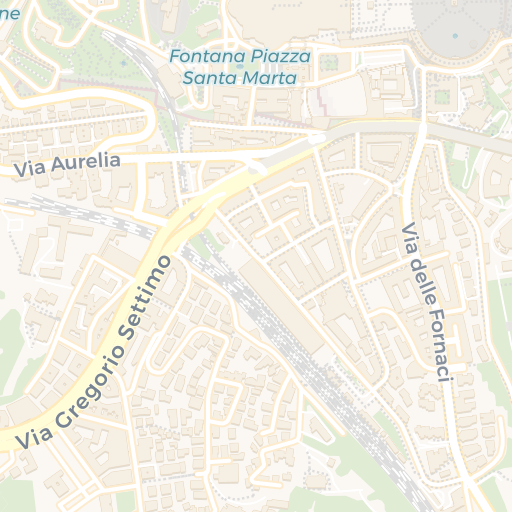
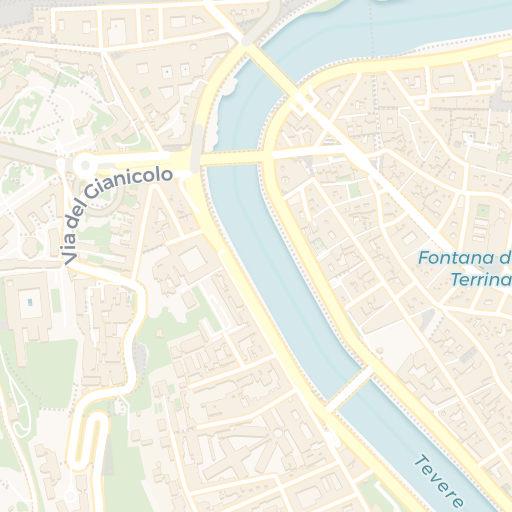
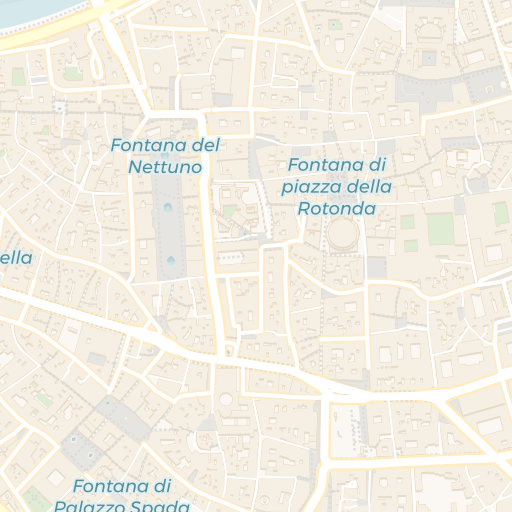
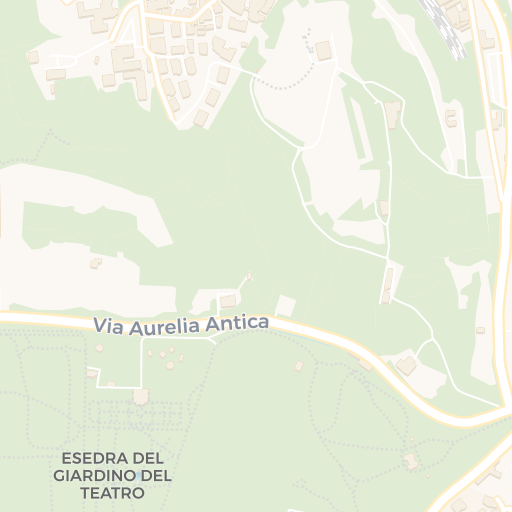
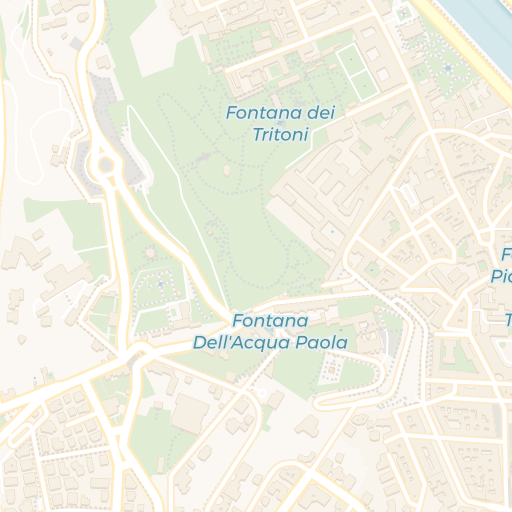
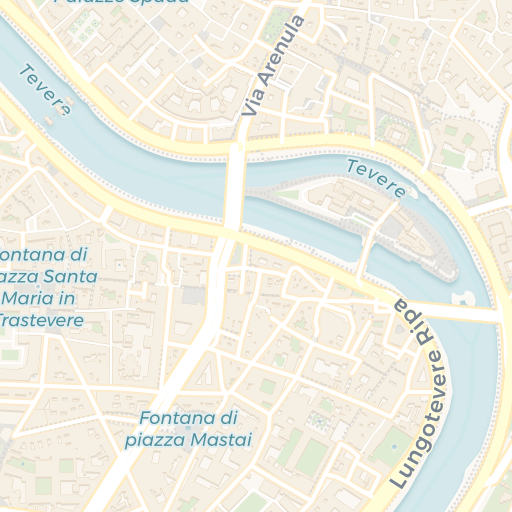
Get directions Open in Apple Maps
© OpenStreetMap contributors · © CARTO · 41.89116, 12.46685
Plan your visit
Walking the rione is free; four of its interiors are not
Trastevere costs nothing to enter and nothing to walk, and so do its squares, its lanes, the Gianicolo view and the noon cannon. What is paid is a short, specific list — and the list has an awkward timetable.
The closures that decide the day
- Villa Farnesina: closed Sunday — except the second Sunday of the month.
- Museo di Roma in Trastevere: closed Monday.
- Palazzo Corsini: closed Monday, and on 25 December and 1 January.
- Botanical Garden: open every day, Sundays and public holidays included.
A Sunday visitor and a Monday visitor therefore lose different halves of the quarter.
Hours
Villa Farnesina — Monday to Saturday 9.00–14.00, last entry 13.15; closed Sunday; extraordinary opening every second Sunday of the month 9.00–17.00, last entry 16.15. Hours in force from 16 February 2026.
Botanical Garden — open every day, Sundays and public holidays included. Check the hours on the garden's own site, because the city's differ from it. Turismo Roma publishes 9.00–18.30 from April to October and 10.00–17.30 from November to March; the garden itself publishes a single year-round window on its home page. No animals except guide dogs for the blind.
Museo di Roma in Trastevere — Tuesday to Sunday 10.00–20.00, last entry one hour before closing; 10.00–14.00 on 24 and 31 December; closed Monday.
Basilica of Santa Maria in Trastevere — no hours are published. For Mass times and visiting arrangements the city directs enquiries to the parish itself.
Mercato di Porta Portese — no opening days or hours are published anywhere we can reach. The city calls it a genuine Sunday ritual for Romans and then refers the reader to the contacts; the market's own site gives the boundaries of its area and no timetable. Treat Sunday morning as the window and do not plan a precise arrival around it.
Ticket & Pass Decision Matrix
| What | Cost | When it is open | Verdict |
|---|---|---|---|
| The rione itself | Free | Always | The lanes, the squares, the Gianicolo view and the noon cannon. This is most of what people come for. |
| Villa Farnesina | EUR 12 full, EUR 10 reduced (students, over-65s, agreements) | Mon–Sat 9.00–14.00; closed Sun bar the 2nd of the month | The quarter's best interior and its tightest window. Free for under-10s, licensed guides, accredited journalists, and disabled visitors with a companion. |
| Botanical Garden | Paid, and never free | Every day | The reliable one, and the Monday answer. Reduced for 6–11s, over-65s and members of John Cabot University, the Touring Club Italiano or the FAI; free for 0–5s, disabled visitors with a companion, and Sapienza staff and students. No free first Sunday — the ticket is always payable. No booking needed. |
| Garden guided visit | +EUR 4 a head on a full ticket, +EUR 2 on a reduced one | Same | About 90 minutes, and only for schools, groups and associations of at least 10. You can walk it alone without one. |
| Museo di Roma in Trastevere | — | Tue–Sun 10.00–20.00 | Roma sparita, the Scene Romane and the Stanza di Trilussa. Closed Monday. |
| Palazzo Corsini | — | Closed Monday, 25 Dec, 1 Jan | The intact Corsini collection, in the same building as the garden's gate. |
| Porta Portese | Free | Unpublished | A Sunday ritual by the city's own description, with no timetable from the city or the market. |
Rules at Villa Farnesina worth knowing before you arrive
- Earphones are obligatory for groups of more than ten.
- Arrive at least 15 minutes before your visit time.
- Photography without flash is allowed. Video filming is not permitted at all — inside or outside, even during the extraordinary openings.
The Botanical Garden, in practice
- No booking. Buying a ticket is enough; booking is only for schools and groups.
- No refunds, ever. The date of access can be changed by email, but no refund is given in any case.
- All the avenues take a wheelchair or a pushchair — but the Tropical Greenhouse, the French Greenhouse, the Serra Corsini, the Scalinata delle Undici Fontane, the rose garden, part of the Giardino dei Semplici, part of the Japanese Garden and part of the bamboo area do not.
- You may eat inside, in keeping with the garden's historic character; the refreshment area with tables opens only at weekends, and there is a vending machine. No cloakroom or luggage deposit.
- Photographs for personal use are fine, without damaging or disturbing the flora and fauna.
- Nearest parking: paid spaces on Lungotevere della Farnesina, and the paid underground car parks of the Gianicolo and via Giulia.
Verified against Villa Farnesina — Accademia Nazionale dei Lincei, October 2026.
When to visit
Not Monday, if you want the museums. The Museo di Roma in Trastevere and Palazzo Corsini are both closed. The Botanical Garden is open every day and is the Monday answer.
Not Sunday, if you want Raphael. Villa Farnesina is closed on Sundays — with one exception, which is worth planning a week around: the second Sunday of the month, when it opens 9.00 to 17.00 and the Accademia programmes a MuSa Sapienza concert at 11.30 (booking compulsory). That is the single best day in the month to be here.
Weekday mornings for the interiors, evenings for the quarter. Villa Farnesina shuts at 14.00; the lanes and squares do not fill until dark. The two do not compete, which means one day covers both.
Noon, every day, wherever you are in the rione. Below the Gianicolo Belvedere three soldiers fire a blank cannon shot at 12 exactly. It is the quarter's only fixed appointment, and it has been kept since 1904.
Sunday morning for Porta Portese — with the caveat that no timetable is published by the city or by the market, so treat it as a window rather than an hour.
April for the Hanami in the Botanical Garden's Japanese garden, and May for the rose garden, whose 60-odd species trace the genus Rosa across 2,000 years. Autumn is the maples. Note that the rose garden and part of the Japanese garden are not wheelchair-accessible, though every avenue is.