
Giardini di Villa della Pergola
Last updated on November 3, 2026What makes Giardini di Villa della Pergola special
The Giardini di Villa della Pergola are 2.2 hectares of terraced garden on the hillside above Alassio , twenty minutes' walk from the beach. Two of the collections here hold records: the most important wisteria collection in Italy , about forty varieties , and the largest agapanthus collection in Europe , over five hundred species . Mediterranean stock grows among a century of imports — jacarandas , giant strelitzias , araucarias and a specimen of the rare Wollemia nobilis . The friction is that you cannot simply turn up. Access is exclusively by guided visit , four slots a day, about 80 minutes , with tickets sold only online in advance . There is no visitor parking at all — not inside, not on the access road. Entry is refused more than ten minutes late , with no refund and no change of time. No pets of any size, no rucksacks, and the terraced paths need closed shoes. The smart way is to pick your flowering and walk up from the station. Wisteria in March and April ; agapanthus in June and July ; hibiscus and oleanders through to November . The gardens are ten minutes on foot from Alassio station through the underpass at Viale Gibb 30 . If you carry an RHS card you go in free.
Visiting tips and strategy
When to go
Pick a flowering, because the gardens publish a calendar and it is the honest answer. They are open every day from 20 March.
March and April: the wisteria, and this is the headline. The most important wisteria collection in Italy, about forty varieties, flowers in these two months and on into May. With it come Cesalpinia, iris, spireas, roses and Erythrina coralloides.
April and May: wisteria plus citrus. The citrus collection flowers alongside roses, Opuntiae, Echium and Ceratostigma plumbaginoides.
June and July: the agapanthus, and this is the other headline. The largest agapanthus collection in Europe — over five hundred species and thousands of specimens — comes into flower, with lotus, Annabelle and oakleaf hydrangeas, tropical and blue water lilies, cacti and Hemerocallis Stella de Oro. May and June bring the lavender and the first water lilies.
July to September: the tropics take over. Oleanders, hibiscus, lantanas, Strelitzia nicolai, lotus and Canna indica in July and August; oleanders, campsis, lantanas, datura and hibiscus in August and September.
September to November: the long tail, and the one most people miss. Hibiscus, oleanders, lantanas, plumbago and Dahlia imperialis carry the garden right through to November, in a month when Alassio is empty.
And the operator's own caveat, which is worth repeating. It states plainly that every season is in itself different: a particularly cold spring will probably delay the flowering times of many early-season flowers, a very warm spring will bring numerous plants into flower early, and a hot, dry summer with drought conditions can shift the times too. The calendar is indicative. Check the current state before committing a journey to a single plant.
One practical note on crowding. Because entry is by booked slot only, the garden itself never fills the way the beach does. The constraint is availability, not congestion: the days with free slots are highlighted in the operator's calendar, and in August, when the comune records town peaks of up to 80,000 people, those slots go first.
Getting there and getting in
Read this before you plan the day: you cannot walk in, and you cannot park.
Access is exclusively by guided visit. The gardens are open every day from 20 March, with slots available every day at 09:30, 11:30, 15:00 and 17:00; more may be added at busy periods. A visit lasts about 80 minutes. Tickets are exclusively available and purchasable in the operator's online ticket office, which it names as the only official source for current times and availability — so treat the four slots above as the normal pattern and check the calendar before travelling. Entry is not guaranteed without advance purchase.
The timekeeping is strict. Access is permitted from ten minutes before the visit; the visit begins at the exact time indicated; and no access is permitted to anyone arriving more than ten minutes after the start. No refunds and no changes of time are admitted. Private tours, organised groups and special events are arranged by email.
Tariffs. Full €19.00. Reduced €15.00 for FAI members, ADSI members, students up to 19 and university students up to 25 with a valid card, disabled visitors with certification at any percentage of invalidity from 0 to 99, and — unusually — residents of Alassio or Albenga on production of a document showing residence. Children of 6 to 14 pay €9.00. Free for children of 0 to 5, for 100% disabled visitors with certification, for the companion of a 100% disabled visitor, and for members of the RHS as their regulations provide.
There is no parking. None. The gardens have no visitor parking, and no vehicle may be parked inside them or on the road that leads to them. They are ten minutes on foot from Alassio station: leave the car at the Parcheggio Stazione Ferroviaria, Parcheggio Piazza Partigiani or Parcheggio Don Bosco and walk, taking the underpass at Viale Gibb 30. A taxi from the station takes five minutes, on +39 0182 646464. Visitors with disabilities or particular needs should contact the property in advance.
Getting there from further off. By car on the A10 Autostrada dei Fiori: from Genoa, exit Albenga then the SS1 bis towards Alassio, 13 minutes; from Ventimiglia, exit Andora then the SS1 Aurelia, 20 minutes. By train on the Genoa-Ventimiglia line. By air: Nice Cote d'Azur 75 minutes, Genoa Cristoforo Colombo 70 minutes, Villanova d'Albenga Riviera Airport 13 minutes for private flights.
What you may and may not bring. No domestic animals of any size, explicitly to protect rare plants and local fauna. No rucksacks, voluminous bags or other bulky objects — they must be left in a paid cloakroom; small bags are admitted. Closed, comfortable shoes are required for the naturalistic routes, and sun protection and/or an umbrella are advised; rain capes are sold in the shop.
Accessibility, in the operator's own words. The gardens are partially accessible to people with reduced mobility: these are historic gardens with a terraced conformation, stairs and ramps, and the use of electrically powered devices is advised where necessary. For tailored arrangements, the private-visits service is the route.
Photography. Professional or commercial photography is forbidden without authorisation; filming for personal use is permitted without tripods or additional lights. Commercial use needs Press Office approval. Press, bloggers and journalists must request accreditation by email at least three days before the visit, and accreditation is not available at weekends or in periods of maximum attendance.
Contact. Via Privata Montagu 9, 17021 Alassio (SV), +39 0182 641599, info@giardinidivilladellapergola.com.
Quick facts
- Type: Garden, Mansion
- Local name: Giardini di Villa della Pergola (vedi la pagina italiana)
- Built: The land bought in 1876 by general William Montagu Scott McMurdo, who built the Anglo-Indian villino "Casa Napier" on a pre-existing residence of the Counts della Lengueglia; the main villa erected from 1880; the park developed from 1922 by the Hanbury family; restored after a judicial auction in 2006 and reopened in 2012
- Architectural style: Two eclectic villas, one with a dome clad in polychrome majolica of Albisola, in 2.2 hectares of terraced English garden with terracotta balustrades marking the viewpoints
Where it is
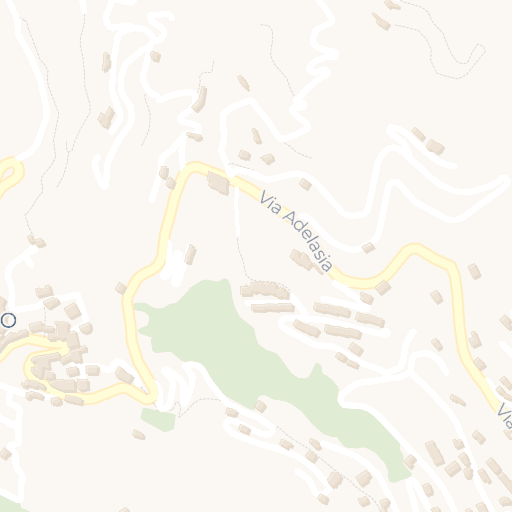
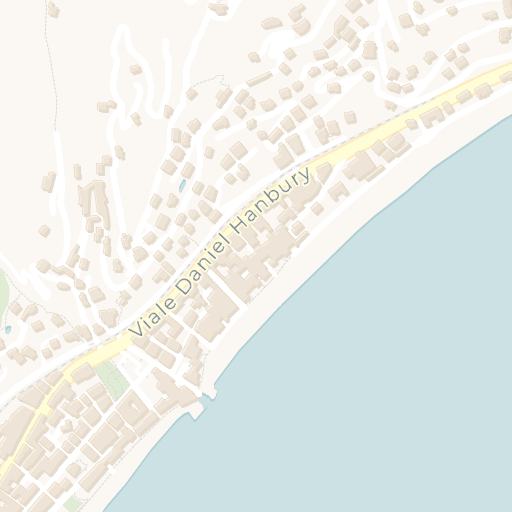
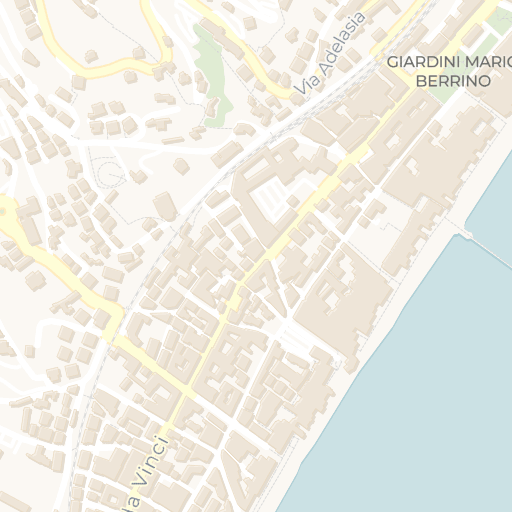
Get directions Open in Apple Maps
© OpenStreetMap contributors · © CARTO · 44.01143, 8.1724
Visit responsibly
The rules here are conservation rules, and the operator says so.
No animals, of any size. The reason given is explicit: the protection of rare plants and local fauna. This is a garden holding Europe's largest agapanthus collection and a specimen of Wollemia nobilis, and the ban is absolute. For dog owners the operator names a pet-sitting alternative in Alassio; note also that the comune bans dogs from the town's sands entirely from 1 May to 30 September, nights included, with a fenced exercise area in the hills at the Parco di Villa Fiske.
No rucksacks or bulky bags on the paths. They must go into the paid cloakroom; small bags are fine. On narrow terraced paths among rare plants, that is a sensible rule rather than a fussy one.
Wear closed shoes and stay on the path. The operator requires closed and comfortable shoes for what it calls naturalistic routes, and recommends sun protection or an umbrella. The terraces are retained by dry-stone walls recovered in the restoration — they are part of the restored fabric, not scenery.
Do not drive here. There is no visitor parking, and parking is prohibited both inside the gardens and on the access road, which is a narrow private lane. Use the Parcheggio Stazione Ferroviaria, Piazza Partigiani or Don Bosco and walk the ten minutes from the station through the Viale Gibb 30 underpass, or take a taxi.
Keep the cameras personal. Professional and commercial photography is forbidden without authorisation; personal filming is allowed but without tripods or additional lights. A tripod on a terrace path blocks it for the group behind you, which is most of the point.
Be on time, and understand why. Entry closes ten minutes after the start of each visit and there are no refunds or time changes. With four guided slots a day and a fixed group size, a late arrival is not absorbed — it is simply a place somebody else could have had.
And the place was nearly lost, which is the context for all of it. Confiscated in wartime, degraded under the German occupation of 1943-45, left for sixty years with only its buildings maintained, and finally sold at a judicial auction in 2006 to a group who put it back. The 22,000 square metres you walk through are a restoration, and the admission is what pays for it.
Verified against Visit Alassio -- official tourism site of the Citta di Alassio, October 2026.