

Palazzo Piccolomini
Last updated on October 14, 2026Why visit Palazzo Piccolomini
Two reasons, and they are quite different from each other.
The first is architectural pedigree. This is one of the earliest examples of Renaissance architecture anywhere, built from 1459 by Bernardo Rossellino for Pope Pius II, and Rossellino took his model from the Palazzo Rucellai in Florence — the work of his own master, Leon Battista Alberti. You are looking at a direct, documented step in the most consequential lineage in Renaissance domestic building.
The second is the back of the house. The rear loggia and garden look south off the hill, and on a clear day the view runs across the Val d'Orcia to the hills of Monte Amiata. The front of this palace belongs to the history of architecture; the back belongs to the landscape that was inscribed by UNESCO in 2004 partly for having been painted so often.
The friction is the booking. The visit is guided only, with an audio guide, and the operator publishes no price and no duration — only that its booking office works weekdays 09:00 to 17:00, on +39 0577 286300. Ring before you build a day around it.
Quick facts
- Type: Palace, Museum, Historic Place
- Local name: Palazzo Piccolomini (vedi la pagina italiana)
- Built: Built from 1459, in the second half of the 15th century
- Built for: Pope Pius II, born Enea Silvio Piccolomini
- Designed by: Bernardo Rossellino
- Architectural style: Early Renaissance
Visit responsibly
Book, and then turn up. This is a guided visit on a timed slot in a small building. A no-show does not simply inconvenience an operator; on a quiet day it can be the difference between a tour running and being cancelled for everyone else who booked it.
Telephone rather than guessing. The operator publishes no price, no duration and no opening hours for the palace, and the practical consequence is that visitors arrive expecting to walk in and are turned away. One call on a weekday prevents a wasted trip up the hill and a conversation someone on a desk has to have twenty times a day.
Keep to the route and the pace of the tour. These are furnished historic interiors — the hall of arms, Pius II's study, the bedchambers, his own collection — with the fabric, the furniture and the objects in the same rooms and mostly unglazed. The guided format is not crowd control for its own sake; it is how a palace of this age gets shown without being worn out.
Do not touch the crests or the window columns on the way in. The stone coats of arms with their gold and silver apostolic insignia are at street level on a public square, unprotected, and they carry the only applied finish on the facade.
Treat the garden as a room. The Renaissance garden is part of the visit and part of the design — the private counterpart to the public square at the front. Stay on the paths, and resist climbing the parapet for the Monte Amiata photograph.
Where it is
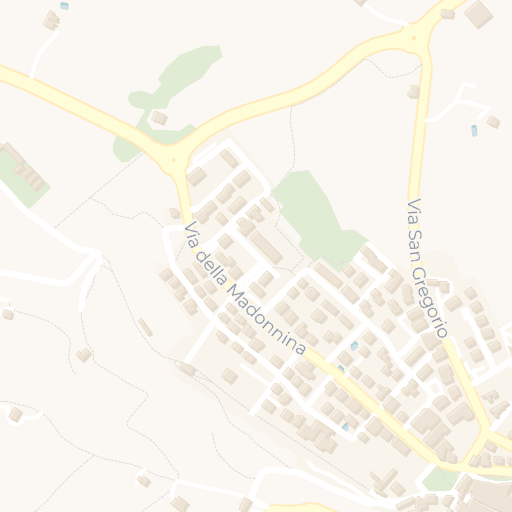
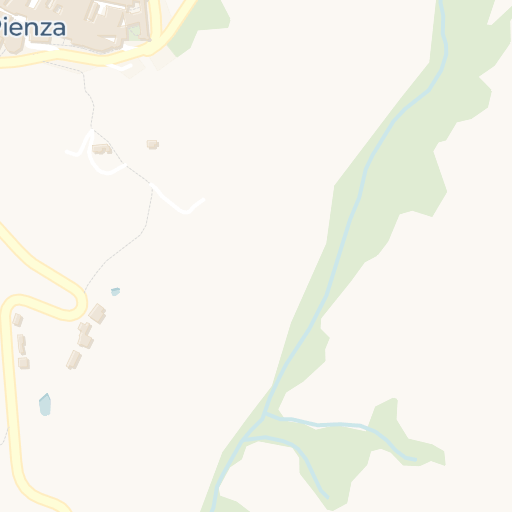
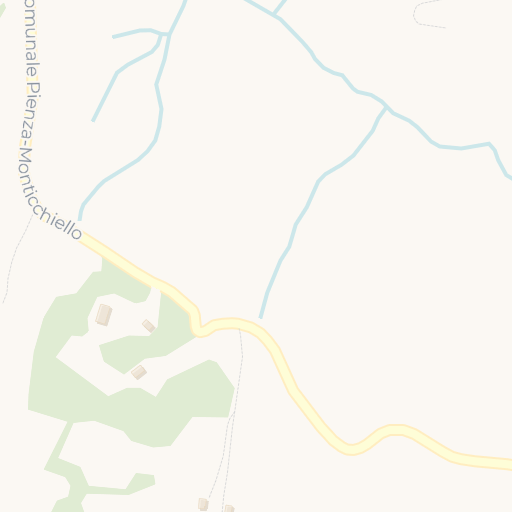
Get directions Open in Apple Maps
© OpenStreetMap contributors · © CARTO · 43.07639, 11.67861
Plan your visit
The visit is guided only, with an audio guide, and covers the palace together with its Renaissance garden. You cannot walk through it on your own.
What the operator publishes
- Guided visits with an audio guide to the Palazzo Piccolomini and the Renaissance garden.
- Booking office hours: Monday to Friday, 09:00 to 17:00.
- Telephone +39 0577 286300.
What the operator does NOT publish, and we will not invent
Three things that most visitors want to know are not published on the operator's booking page: the ticket price, the length of the visit, and the palace's own opening hours. Note the distinction carefully — the 09:00 to 17:00 above is when you can reach the booking office, which is not the same as when the building admits visitors.
So the single piece of practical advice for this palace is: telephone first. On a weekday, before you fix your day around it. Nothing on this page is a substitute for that call, and anything you read elsewhere quoting a price or a duration is not coming from the operator.
The Comune di Pienza switchboard, if you need it, is 0578 748502, at Corso Rossellino 61.
Planning around it
Because the visit is guided and timed, treat the palace as the fixed point of a day in Pienza and arrange everything else around it. The Duomo next door and the whole of Piazza Pio II need no booking and no ticket, so they absorb whatever waiting the palace imposes.
Verified against Palazzo Piccolomini, Pienza, October 2026.
When to visit
A weekday, in spring or autumn, having telephoned first. The weekday matters more here than at any other sight in Pienza, because the booking office is only reachable Monday to Friday, 09:00 to 17:00, and the visit is guided rather than walk-up.
April to early June and late September to October are the best windows, and for this building there is a specific reason beyond the weather: the rear loggia and garden look across the Val d'Orcia to Monte Amiata, and that view only exists on a clear day. Spring and autumn give the cleanest air; a hazy August afternoon can erase the whole thing.
July and August work, but the square outside is at its fullest and the air is at its haziest, which costs you the best feature of the visit.
November to March is quiet and cheap in Pienza generally, but this is the sight most likely to have reduced access out of season — and since the operator publishes no opening hours at all, winter is exactly when a phone call stops being advisable and becomes necessary.