

Pienza Cathedral
Last updated on October 14, 2026Why visit Pienza Cathedral
Most cathedrals were built where the church already stood. This one was turned sideways and pushed off a cliff to make a square work, and that is the reason to come.
Pius II and Bernardo Rossellino wanted Piazza Pio II to be the first town centre composed on Renaissance principles, and the site was far too small — no longer than the courtyard of the palace next door. So between 1459 and 1462 they built the cathedral on an unusual north–south axis, facade to the north, and set it as far south as it would go, until the apse and part of the transept were standing out over the steep hillside. That bought about 25 metres of square.
It has been subsiding ever since, exactly as you would expect, and the cracks are part of what you go to see.
Inside are panels Pius II commissioned from the best Sienese painters of his moment, between about 1461 and 1463: Giovanni di Paolo, Matteo di Giovanni, Vecchietta and Sano di Pietro.
The friction is that nobody publishes its hours. Treat it as a working co-cathedral, come in the morning, and have a second plan.
Quick facts
- Type: Church, Sacred Place, Historic Place
- Local name: Duomo di Pienza (vedi la pagina italiana)
- Built: Built 1459-1462; consecrated 29 August 1462
- Designed by: Bernardo Rossellino
- Architectural style: Renaissance, with a structurally Gothic interior
Visit responsibly
Come outside service times, and if a service starts, stay still or leave. This is the co-cathedral of a living diocese and the seat of a parish, and it has been a working church continuously since 1462. The absence of a published timetable means you may well walk into the middle of something.
Do not lean on or touch the east end. The apse has been subsiding since the building was finished, and the masonry there is monitored and repeatedly consolidated. Cracks in a wall are not a handhold, and a building under long-term structural observation does not need help.
No flash on the panels. Pius II's commissions from Giovanni di Paolo, Matteo di Giovanni, Vecchietta and Sano di Pietro are unglazed 15th-century paint, hung in a church rather than a museum, with no barrier and no attendant watching. The Gothic windows make the interior bright enough that you do not need a flash in any case.
Keep out of the choir. The carved wooden choir in the central apsidal chapel is later-15th-century furniture still in liturgical use. It is not seating for visitors.
Leave a donation rather than nothing. There is no ticket to this building, and no ticket revenue to maintain a church that is structurally expensive by construction. The box by the door is doing work the turnstile does elsewhere.
Where it is
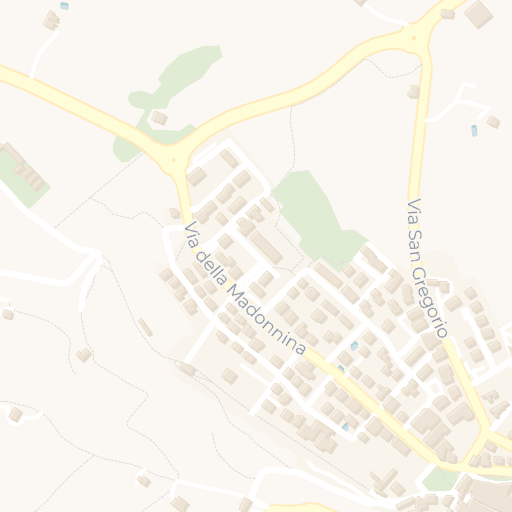
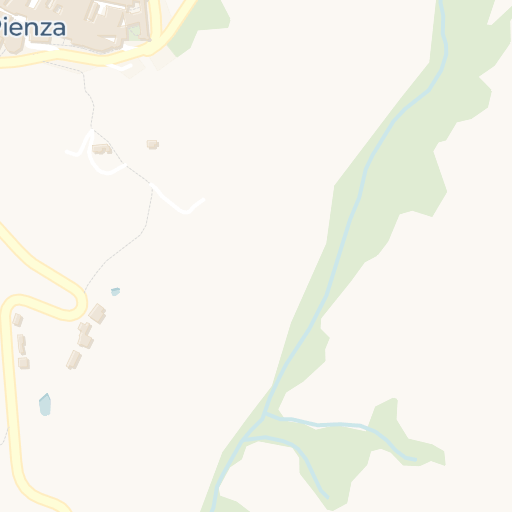
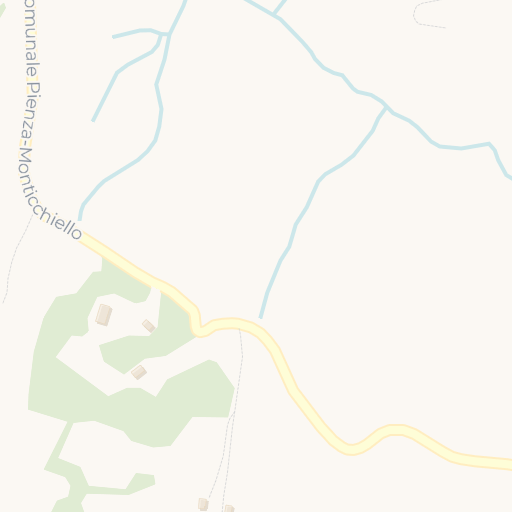
Get directions Open in Apple Maps
© OpenStreetMap contributors · © CARTO · 43.0763, 11.6791
Plan your visit
This is a working co-cathedral, not a ticketed museum, and no opening hours or admission price for it are published anywhere we can verify. That is an honest gap rather than an omission: the diocese and the municipality do not post a timetable for it on any reachable page, and we do not restate a third party's guess at a church's hours.
What that means in practice:
- Treat it as a church. Entry is ordinarily free, as at any Italian parish or cathedral, and it closes for services and over the middle of the day as its clergy decide.
- Go in the morning. That is the most reliable time to find an Italian church of this kind open, and the light through the Gothic windows is at its best before the afternoon.
- Have a second plan for the same hour. The Palazzo Piccolomini is a few metres west across the square, and the whole of Piazza Pio II costs nothing and needs no hours.
- Ask the municipality if timing matters. The Comune di Pienza switchboard is 0578 748502, at Corso Rossellino 61.
Access and what to expect
The church is level with the square and there is no climb and nothing to book, which makes it the easiest major sight in a town already chosen for being easy. The interior is bright by Tuscan standards, so the paintings can be read without feeding a light meter.
Expect scaffolding somewhere. The apse has been subsiding since the 15th century and the building has been through long campaigns of consolidation — most recently a twenty-three-year programme from 1911 to 1934. Parts of the east end are periodically under repair, and that is the normal condition of this building rather than bad luck.
Verified against Comune di Pienza, October 2026.
When to visit
A spring or autumn morning. Mornings because an Italian co-cathedral with no published timetable is most reliably open then, and spring or autumn because that is when Pienza itself is at its best and the square is not full.
April to early June and late September to October are the two windows: warm, long light, and the Val d'Orcia at its greenest or its most golden just below the apse.
July and August bring the Val d'Orcia touring crowds into a square that is, by design, barely larger than a courtyard. Come before 10:00 and the piazza is yours.
November to March is quiet and cheap, and the interior is a better place to be than most Tuscan churches in winter because the Gothic windows in the side walls and apse make it unusually bright on a low-sun day. Church hours contract in winter, so the morning rule matters more.
Whatever the season, avoid arriving during a service unless you intend to attend one.