

Basilica di Santa Chiara, Assisi
Last updated on November 3, 2026What makes Basilica di Santa Chiara, Assisi special
Santa Chiara keeps the object most closely associated with Francis rather than with Clare: the original crucifix of San Damiano , the one that spoke to him, hangs above an altar in the oratory here and not in his own basilica up the hill. The church was raised 1257-1265 around the older church of San Giorgio , which had held Francis's body until 1230 , so a single building ends up carrying both lives. Clare's tomb is in the crypt, and the relics include the deacon's alb she embroidered for Francis . The friction is that the door opens two hours before you may look. The basilica opens at 06:30 but visiting is allowed only from 08:30 , there is a real midday break on weekdays, and it closes when Vespers end rather than at a set time. The smart way is a weekend or a feast day. Saturdays, Sundays and nine named feast days run continuous hours with no midday closure. Entry is free, and it is ten minutes downhill from San Francesco .
Verified against Basilica di Santa Chiara — Protomonastero di Santa Chiara, Assisi, October 2026.
Visiting tips and strategy
When to go
A Saturday or a Sunday, for the simplest reason: no midday closure. Weekends and predefined feast days run continuous hours, where an ordinary weekday shuts between 12:30 and 14:00.
11 August is the Solemnity of Saint Clare — this basilica's own day, and one of the nine dates the operator names for continuous opening.
Not before 08:30, whatever the door says. The basilica is open from 06:30 but visiting is not allowed until 08:30. Arriving at seven gets you a closed grille and a reproachful look.
Late afternoon, with one caveat. Last admission is 17:45, or 18:45 in legal time, and the building closes when Vespers end. Come at the limit and you will be inside for the office rather than instead of it — which some visitors want and others do not.
3 and 4 October fills Assisi, not just the other basilica. The Solemnity of Saint Francis is on the continuous-hours list here too, which is a measure of how much of the town is in motion.
Winter afternoons are short and the church is dark. Mass moves to 16:30 and Vespers to 17:45; the nave has no painted surfaces to light and the single-light windows are narrow. The compensation is that you may have the San Damiano crucifix to yourself.
Getting there and getting in
Read the first line before planning: the door opens two hours before you are allowed to look. The basilica opens at 06:30, but the operator states plainly that visiting is permitted from 08:30. The first two hours belong to the community's prayer.
Ordinary weekdays have a real midday break. Morning 06:30-12:30; afternoon 14:00-17:45, or 18:45 in legal time — and that time is the last admission, not the closing. The basilica closes at the end of the celebration of Vespers, so the final hour is governed by the liturgy rather than the clock.
Weekends and feast days run straight through. Saturdays, Sundays and predefined feast days keep continuous hours 06:30-17:45, or 18:45 in legal time, with no midday closure.
Nine further dates do the same, and the operator lists them: 6 January (Epiphany), 25 April (Liberation Day), 2 June (Republic Day), 11 August (the Solemnity of Saint Clare), 15 August (the Assumption), 3 and 4 October (the Solemnity of Saint Francis), 8 December (the Immaculate Conception) and 31 December.
Mass times, by season. Winter (solar time): weekdays 07:15 and 16:30; feast days 07:15, 11:00 and 16:30. Summer (legal time): weekdays 07:15 and 17:30; feast days 07:15, 11:00 and 17:30. In winter Lauds are at 06:45 and Vespers at 17:45.
There is no admission charge, and nothing read for this page publishes a guided-visit tariff, an accessibility statement or transport directions for this basilica specifically. For reaching Assisi itself, the station sits 3 km below the historic centre near Santa Maria degli Angeli, with buses from the forecourt every 30 minutes.
Verified against Basilica di San Francesco — Sacro Convento di Assisi, October 2026.
Quick facts
- Type: Church, Sacred Place
- Local name: Basilica di Santa Chiara, Assisi (vedi la pagina italiana)
- Built: Built 1257-1265 by the architect Filippo da Campello around the earlier church of San Giorgio; Clare's remains translated in 1260; consecrated 1265 in the presence of Clement IV; the flying buttresses added at the end of the fourteenth century; the crypt made in 1850-1872 and arranged in neo-gothic style in 1935
- Architectural style: Gothic, closely recalling the almost contemporary upper basilica of San Francesco: a single nave of four bays in white and pink Subasio stone, with three polygonal flying buttresses on the left flank
Where it is
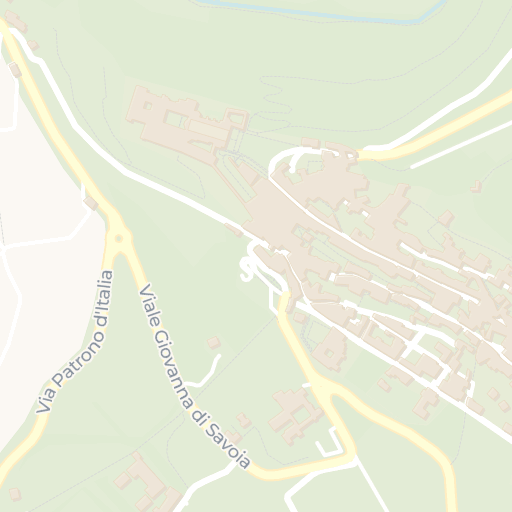
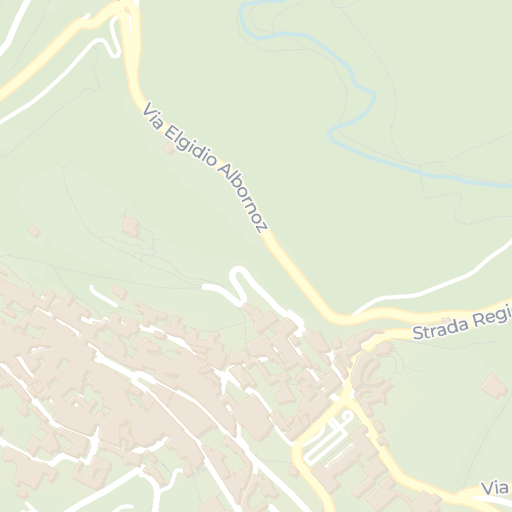
Get directions Open in Apple Maps
© OpenStreetMap contributors · © CARTO · 43.06889, 12.61694
Visit responsibly
The 08:30 rule is the whole ethic of this building in one line. The Poor Clares open the church at 06:30 for their own prayer and admit visitors two hours later. Respecting that is not a courtesy — it is the condition on which a monastic community shares a working church with several thousand people a day.
It closes when Vespers end, so the last visitors are inside an office. If you arrive at last admission, you are joining the liturgy rather than touring around it. Sit, or leave; do not walk the aisles with a camera while it is said.
The relics are behind a grating for a reason. The crucifix of San Damiano, the alb Clare embroidered for Francis, the sandal and stocking she made him, her own tunic, mantle and hair — these are devotional objects in a church, not museum holdings. No flash anywhere near them.
The bare nave is damage, not minimalism, and it is still fragile. A cycle on Clare's life went to an eighteenth-century whitewashing and the earthquake of 13 January 1832; what survives are fragments. Keep off the walls and the painted dadoes in the side chapels.
Come on foot from San Francesco. The two basilicas are at opposite ends of the same small walled town, and Assisi's historic centre is closed to unauthorised vehicles anyway. Walking between them is both the only practical route and the way the town was meant to be read.