

Lagazuoi and Passo Falzarego
Last updated on November 15, 2026Hours verified November 2026
From Passo Falzarego, half an hour west of Cortina, a cable car climbs in four minutes to the Rifugio Lagazuoi at 2,752 metres. The view from the terrace takes in most of the Dolomites at once, and it is one of the few great alpine viewpoints reachable without walking.
The mountain underneath is hollow. In the First World War the front ran across it, and both armies tunnelled -- Italians upward from below, Austrians downward from the summit ridge -- to plant mines under each other's positions.
Those tunnels can be walked. The Italian Galleria del Lagazuoi descends roughly a kilometre through the inside of the mountain, and you go down it with a helmet and a torch.
Challenge to visitors
The cable car is seasonal and currently between seasons. For winter 2026/27 it runs from 23 December to 4 April; outside the published seasons there is no lift and the terrace is reachable only on foot.
The war galleries are the reason to come and they are not a museum. The open-air Great War site is cut into the mountain itself — tunnels, ledges and positions — and it is explored outdoors in mountain conditions, not walked round indoors.
And the pass is a road, with the weather of one. Passo Falzarego is at 2,105 metres and closes or becomes difficult in snow; the drive is as much of the plan as the lift.
Visiting tips and strategy
When to go
Late June to late September is the summer season, when the cable car runs and the tunnel is open and free of snow.
Early morning for clear air and the sharpest panorama; cloud builds over the peaks through the afternoon.
Sunset from the terrace is the reason to stay overnight at the refuge -- the enrosadira, the pink flush on the rock, is at its best here.
Winter brings skiing and the famous Armentarola run down towards Badia; the tunnel is closed.
Avoid the tunnel after heavy rain or early in the season, when meltwater and ice make the steps genuinely dangerous.
Getting the good version
Download the historical guide app before you leave the valley. The operator publishes one for the open-air Great War museum, and signal at 2,700 metres is not something to rely on.
Allow time at the top rather than treating it as a viewpoint. The galleries and positions take an hour or more to walk properly, and the point of the place is the tunnelling rather than the panorama.
Mountain clothing, in any season. At over 2,700 metres on an exposed rock terrace, conditions bear no relation to Cortina in the valley.
There is a rifugio at the top which takes bookings, so this can be an overnight rather than a day trip — which is the way to see the site at dawn without the lift queue.
What it costs
The pass itself is free — Passo Falzarego is a public mountain road at 2,105 metres, open whenever conditions allow.
The cable car to the Lagazuoi terrace is ticketed and seasonal, running 23 December 2026 to 4 April 2027. The operator publishes its fare table only as a downloadable PDF, so no figure is quoted here; the ticket office answers on +39 0436 867301, and the operator says buying online both skips the queue and costs less.
Pedestrian lift passes exist and may be cheaper than single tickets. The Cortina tourist office lists a Cortina Vertical Pass covering the basin's lifts for pedestrians and a Dolomiti Supersummer Card across the Dolomiti Superski area; note that the Cortina Bike Pass is explicitly not valid on the Lagazuoi cable car.
The open-air Great War museum is on the mountain, not behind a desk. It is explored with a downloadable app guide rather than a ticket.
The Rifugio Lagazuoi takes bookings for meals and overnight stays, which is a separate arrangement from the lift.
Verified against Funivia Lagazuoi, November 2026.
Getting there and getting in
Where it is
Passo Falzarego, 2,105 m, on the road west of Cortina, with the cable car rising from the pass to the Lagazuoi terrace at over 2,700 m.
Season
23 December 2026 to 4 April 2027. Outside the published seasons the cable car does not run.
Hours
First ascent 09:00, last ascent 16:40, last descent 17:00, with a departure every fifteen minutes. The last ascent is the number to plan around, not the last descent.
Tickets
Sold online or at the station; the operator publishes its tariff as a PDF. Ticket office +39 0436 867301.
What is up there
An open-air Great War museum of tunnels, ledges and positions cut into the mountain, explored with a downloadable historical guide app; the Rifugio Lagazuoi, which takes bookings; via ferrata routes and marked descents on foot.
How long
Half a day for the terrace and the galleries; longer if you walk down rather than ride.
Place accessibility
The cable car removes the ascent, and the operator presents the mountain as an accessible one — it publishes a dedicated feature on the theme alongside its activities.
What is at the top is not uniformly easy, though. The open-air Great War site is tunnels, ledges and positions cut into a rock face at over 2,700 metres; that is mountain terrain, and it is a different proposition from the terrace at the lift station.
The terrace itself is the accessible destination. Arriving by cable car and staying on the terrace gives the view across to the Tofane and the Marmolada without entering the galleries.
Not published, and not guessed: step-free access at either cable-car station, and which parts of the outdoor site can be reached without scrambling. The operator publishes the season and the services and no detailed access statement.
Quick facts
- Type: Nature
- Local name: Lagazuoi e Passo Falzarego (vedi la pagina italiana)
- Built: Tunnels dug 1915-1917; opened as a museum from the 1990s
- Elevation: 2752 m
- A war fought inside the mountain: Unable to take each other’s positions by assault at this altitude, both armies tunnelled towards them and packed the galleries with explosive. The mine craters are still the most obvious feature of the face.
- You can walk down the mine tunnel: The Italian Galleria del Lagazuoi descends about a kilometre through the inside of the mountain, on steps and fixed cable, in complete darkness -- helmet and headtorch required.
Where it is
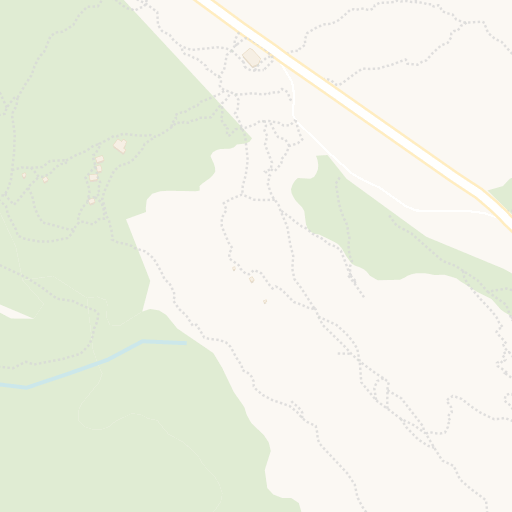
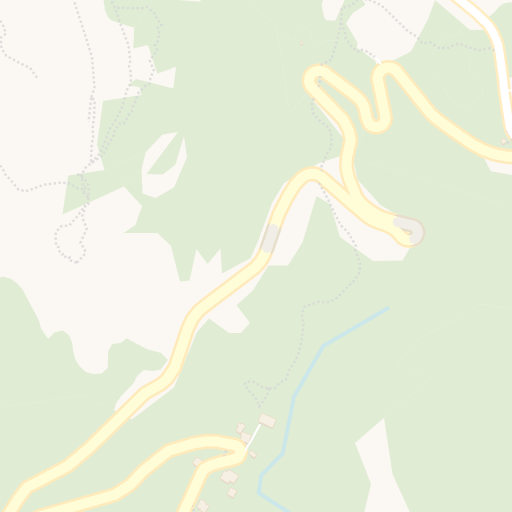
Get directions Open in Apple Maps
© OpenStreetMap contributors · © CARTO · 46.5194, 12.0072
Visit responsibly
The tunnel is not a tourist attraction with railings. It is a restored military gallery with steep steps, wet rock and no lighting. Go down it, not up; carry a working headtorch and a spare; wear a helmet; and turn back if conditions are poor.
The whole mountain remains a war site. Do not remove anything -- fragments, wire, ordnance. Unexploded material still surfaces here, and it is reported, not pocketed.
Keep to the marked paths and walkways on the ledge and around the positions. The restoration is what allows access at all, and it is maintained by volunteers.
High-altitude vegetation recovers over decades. Do not shortcut switchbacks.
Staying at the refuge rather than driving down supports the people who keep the site open, and gives you the view at the hours it is actually worth seeing.