

Burano
Last updated on November 15, 2026Burano is a small, brightly painted fishing island in the Venetian Lagoon, about 7 kilometers northeast of Venice and a roughly 45-minute vaporetto ride from St. Mark's Square. Its houses -- rows of saturated blues, reds, yellows, and greens along narrow canals -- make it one of the most photographed corners of the lagoon, but the island's older claim to fame is a tradition of handmade lace so fine it once dressed European royalty.
Challenge to visitors
It is 45 minutes each way. Roughly three-quarters of an hour by waterbus from St Mark's — so a visit is most of a half day before you have walked anywhere, and a single 75-minute ticket does not survive the round trip.
Everyone comes for the photograph. The painted terraces are among the most photographed things in the lagoon, which means the main canal in the middle of the day is a queue of people taking the same picture.
And the lace is the older story, mostly unseen. The island's handmade lace tradition predates its fame for colour, and almost none of the lace for sale is made the way the tradition means.
Visiting tips and strategy
When to go
Burano draws heavy day-trip crowds from late morning through mid-afternoon, often on the same itinerary as a stop in Murano. Visiting early in the morning or in the last couple of hours before the final vaporetto back to Venice gives a much quieter view of the canals and houses, closer to how the island actually looks to the people who live there.
Getting the good version
Buy a day card before you set out. At €25.00 it covers Burano, Torcello and Murano in one trip; a €9.50 single expires 75 minutes after validation, which is less than the journey out and back.
Go early or late. The island is a 45-minute ride, so the crowd arrives mid-morning and leaves mid-afternoon in a block. Either end of that is a different island.
Leave the main canal. The photographed terrace is one stretch of one waterway; the colour runs through the whole island and the back lanes are empty.
Pair it with Torcello, which is minutes further on and the opposite experience — Burano is full of colour and people, Torcello is fields and two churches.
What it costs
Nothing to be on the island. Burano charges no admission; the cost of visiting is the boat.
€9.50 single, valid 75 minutes from first validation. Given the crossing is around 45 minutes each way, a single will not get you back — this is the fare mistake to avoid.
Day cards: €25.00 (1 day), €35.00 (2), €45.00 (3), €65.00 (7). For Burano specifically the day card is not an upgrade, it is the sensible purchase.
€1.50 for EU Disability Card holders and wheelchair passengers, companion free.
Lace shops and the island's museum set their own prices, which ACTV does not publish.
Verified against Actv SpA (AVM, Venice public transport), November 2026.
Getting there and getting in
Getting there
By ACTV waterbus, roughly 45 minutes from St Mark's. The crossing is the only compulsory cost.
Fares
Single €9.50 valid 75 minutes — less than a return journey to Burano. Day cards €25.00 / €35.00 / €45.00 / €65.00 for 1, 2, 3 and 7 days.
Concessions
€1.50 with an EU Disability Card or in a wheelchair, companion free; free companion travel for blind and severely sight-impaired passengers with the Provincial Tessera marked "with companion".
On the island
Painted houses along narrow canals, a leaning campanile, and a handmade lace tradition older than the island's fame for colour.
How long
Two hours on the island; a full day with Torcello and Murano on one card.
Verified against Actv SpA (AVM, Venice public transport), November 2026.
Place accessibility
The boat has real provision: €1.50 for wheelchair passengers and EU Disability Card holders, companion free, and free companion travel for blind and severely sight-impaired passengers.
The journey is the demanding part. Around 45 minutes each way on the water, which for some visitors is the deciding factor rather than anything on the island.
The island itself is small and flat, built along canals rather than up anything — the painted terraces are seen from the quaysides at ground level.
But it is canals, so it is bridges. Crossing from one side of a rio to the other means a bridge, and lagoon bridges are usually stepped.
Not published, and not guessed: which landing stages are step-free, whether any bridge on Burano is ramped, or the surfaces of the quaysides.
Quick facts
- Type: Island, Neighborhood, Historic Place
- Local name: Burano (vedi la pagina italiana)
- Visitor access: Open to visitors
- Reservation: Not required — tickets on the door
- Typical visit: About 2 hours
- UNESCO World Heritage Site: Yes
Where it is
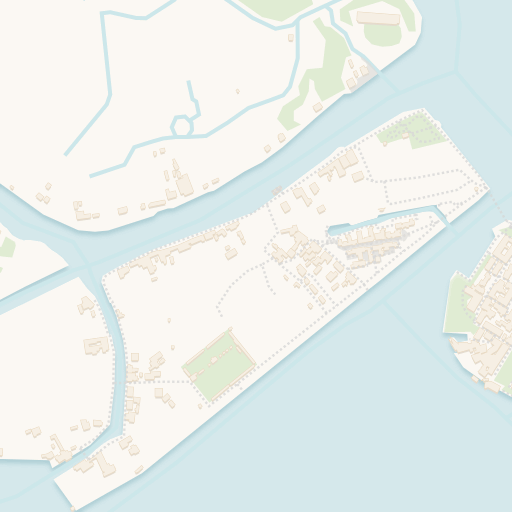
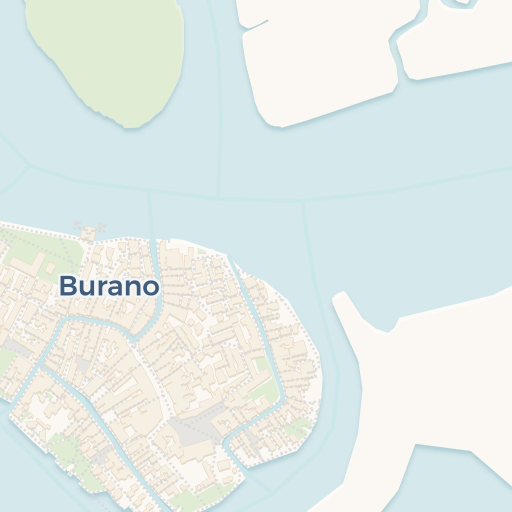
Get directions Open in Apple Maps
© OpenStreetMap contributors · © CARTO · 45.48536, 12.41754
Visit responsibly
Burano is a small, still-inhabited fishing community, not a stage set -- the brightly painted houses are people's homes, and its narrow streets were not built for the volume of visitors that arrives on a typical afternoon. Keeping to public areas, being mindful of noise near residential doorways, and buying lace directly from island workshops rather than resellers helps support the community whose presence gives the island its character in the first place.