

Canals of Venice
Last updated on November 17, 2026Venice's canals form its transport network, public frontage and connection to the lagoon. The Grand Canal carries scheduled water buses, deliveries and private traffic through the historic centre, while smaller rii divide the built islands and provide water access to homes, churches and palaces.
More than scenery, the canals explain how Venice works. Their dimensions and functions vary, from the broad Grand Canal to narrow neighbourhood waterways, and their edges reveal centuries of construction, maintenance and adaptation to tides.
Canals and bridges
Venice is commonly described as having around 150 canals and roughly 400 bridges, although totals vary according to what is counted. These approximate figures are more useful as a sense of the network's scale than as an exact survey.
Challenge to visitors
They are infrastructure, not scenery, and reading them as scenery misses the city. The canals carry scheduled water buses, deliveries and private traffic; they are how Venice works rather than how it decorates itself.
Looking is free, moving is not. Standing on a bridge costs nothing, but every way of actually travelling on the water has a fare, and they differ enormously in price.
And the gondola is the expensive answer to a question the vaporetto also answers. Both put you on the water; one is a scheduled fare of a few euro and the other is a private hire.
Visiting tips and strategy
When to go
The canals are quietest in the early morning, before day-trip trains and cruise passengers arrive -- gondoliers, delivery boats, and produce barges have the water mostly to themselves before around 9am.
Acqua alta (exceptional high water) is mostly an autumn-to-early-spring event, most likely October through January, when high tides combine with sirocco winds and low pressure to push water over the canal banks into St Mark's Square and other low-lying areas. Raised walkways (passerelle) go up within hours of a forecast, and the water typically recedes within a few hours too -- it's disruptive but rarely cancels more than part of a day.
Peak crowds run April through October, heaviest around Easter, throughout summer, and during the Redentore (July) and Regata Storica (September) festivals, when the canals themselves become part of the event -- boat processions and fireworks draw people to the waterline. November through March sees noticeably thinner crowds, at the cost of a real chance of acqua alta and shorter days.
Winter fog (nebbia) occasionally grounds vaporetto and water-taxi services for a few hours at a time -- infrequent, but worth building slack into a winter itinerary for.
Getting the good version
Ride the Grand Canal on a scheduled waterbus. A single ACTV ticket at €9.50 buys 75 minutes, which is enough to go the length of it — the cheapest grand tour in Europe, and the way residents do it.
Then get off the Grand Canal. The narrow rii are where the city's actual texture is: water against doorsteps, laundry, deliveries, boats reversing into gaps barely wider than they are.
Buy a day card if you will board more than twice. At €25.00 it beats three singles and removes the 75-minute clock from your planning.
Walk the fondamente at night. The canals are quietest and most reflective after the day traffic stops, and the walking is free.
What it costs
Nothing to look at them. The canals are public waterways seen from public bridges and quaysides at any hour, free.
Travelling on them costs. ACTV's single ticket is €9.50, valid 75 minutes from first validation across the waterbuses, buses, trams and People Mover.
Travel cards: €25.00 for one day, €35.00 for two, €45.00 for three, €65.00 for seven. More than two boardings and the day card is cheaper.
€1.50 for holders of the EU Disability Card and wheelchair passengers, with the companion travelling free.
Gondolas and private water taxis are a separate market and are not covered by any of these fares.
Verified against Actv SpA (AVM, Venice public transport), November 2026.
Getting there and getting in
Looking
Free, at all hours, from any bridge or fondamenta.
Travelling
ACTV runs the scheduled waterbuses. Single €9.50, valid 75 minutes; day cards €25.00 / €35.00 / €45.00 / €65.00 for 1, 2, 3 and 7 days. Concession €1.50 with an EU Disability Card or in a wheelchair, companion free.
What the network is
The Grand Canal carries scheduled water buses, deliveries and private traffic through the historic centre; the smaller rii divide the built islands and give water access to homes, churches and palaces. Dimensions and functions vary from the broad Grand Canal to narrow neighbourhood waterways.
How long
An hour for the length of the Grand Canal by waterbus, which fits inside one single ticket.
Place accessibility
The waterbus is the most accessible way to move around Venice, and the fares say so: €1.50 for wheelchair passengers and EU Disability Card holders, companion free, with free companion travel for blind and severely sight-impaired passengers holding the Provincial Tessera.
Travelling by water avoids the bridges, which are the real obstacle in this city — a route that would mean a dozen stepped crossings on foot can be a single boarding instead.
Boarding is the variable. A floating pontoon moves with the water and with passing traffic, and the step from pontoon to boat is not fixed.
Looking at the canals needs nothing at all — every bridge and fondamenta is public ground.
Not published here: which individual landing stages are step-free. ACTV publishes its fares and concessions; it does not publish a stop-by-stop access list, and the canals themselves have no administering body to describe their edges.
Quick facts
- Type: Famous Wonder, Historic Place, Canal
- Local name: Canali di Venezia (vedi la pagina italiana)
- Visitor access: Open to visitors
- Built: Progressively since the 5th century.
- Number of canals: 150
- Number of bridges: 400
- UNESCO World Heritage Site: Yes
Where it is
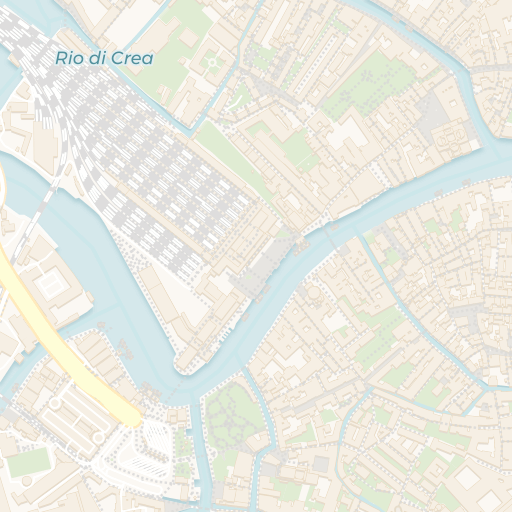
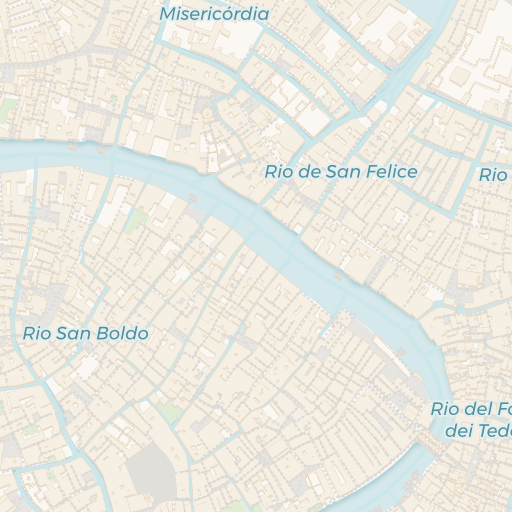
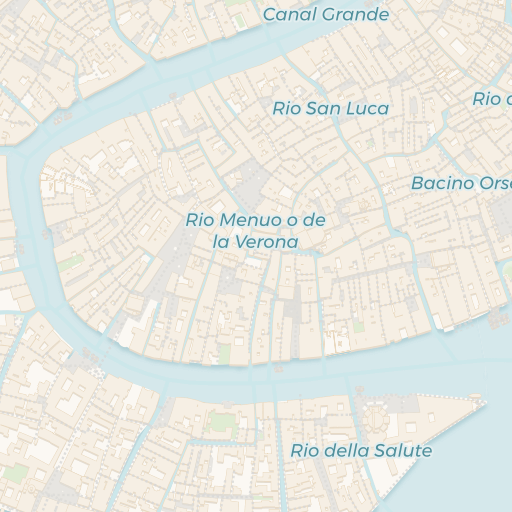
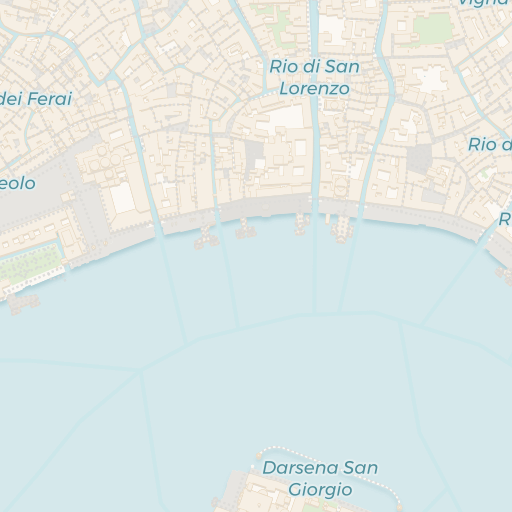
Get directions Open in Apple Maps
© OpenStreetMap contributors · © CARTO · 45.4363, 12.3325
Visit responsibly
The Grand Canal and the area around the Rialto and St Mark's Square see the heaviest crowds around midday during peak season (April-October) -- visitors seeking a quieter experience may prefer early morning, evening, or the shoulder months of spring and autumn.
Large cruise ships were barred from entering the Giudecca Canal in 2021, after years of concern over their wake and exhaust in a waterway never built for vessels that size -- a shift that came directly from local pressure over the canals' long-term health. Venice also introduced an entry fee for day-trippers in 2024, aimed specifically at spreading visitor impact more evenly across the calendar.
Boat wake (moto ondoso) from private water taxis and speedboats contributes measurably to the erosion of building foundations along the canals -- choosing the vaporetto or a traghetto over a private speedboat, where the trip allows for it, is a small choice that adds up across the volume of visitors the city receives.