

Pellestrina
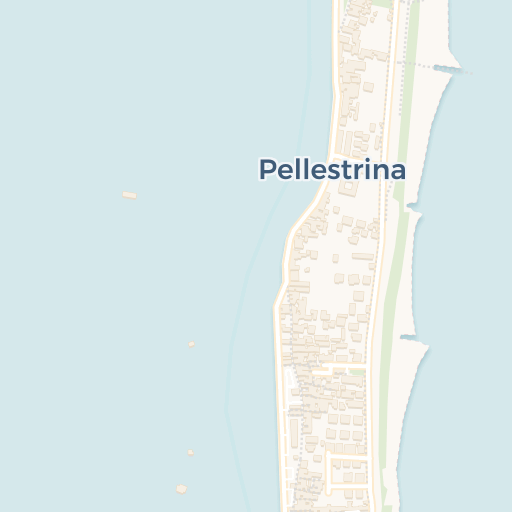
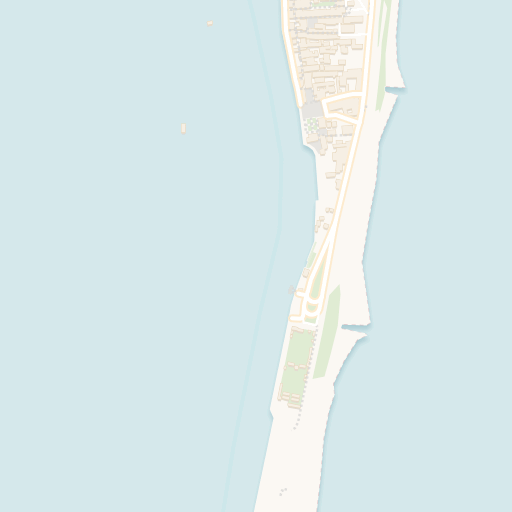
Last updated on November 15, 2026Pellestrina is the long sandbar that closes the southern Venetian lagoon -- eleven kilometres from end to end and in places barely a hundred metres wide, with the Adriatic on one side and the lagoon on the other.
Four fishing villages sit along it. There are no hotels to speak of and almost no visitors, which on this lagoon is remarkable.
Its defining structure is the murazzi: enormous sea walls of Istrian stone that the Republic built along the seaward side between 1744 and 1782 to stop the Adriatic breaking through. They are the last great public work Venice completed before it fell.
Challenge to visitors
Almost nobody goes, and there is almost nothing laid on. No hotels to speak of, few visitors, and none of the apparatus of a destination — which is exactly why it is worth the trip and exactly why it needs planning.
It is at the far southern end of the lagoon. This is not a Burano-style hop; reaching Pellestrina is a committed journey and a 75-minute single ticket is nowhere near enough.
And it is eleven kilometres long. Arriving at one end does not put you near the other, on an island a hundred metres wide with four villages strung along it.
Visiting tips and strategy
When to go
Spring and autumn are the best -- mild, clear, and the light along the murazzi in the late afternoon is the reason photographers come.
Summer brings Italian beach visitors to the seaward side but nothing like the density of the mainland resorts; the island stays quiet by any normal standard.
Winter storms against the murazzi are genuinely dramatic, and this is the season that explains what the wall is for -- though the crossing can be rough.
Go on a weekday for the working island: boats landing, nets being worked, and very few other outsiders.
Getting the good version
Give it a whole day and buy the day card. At €25.00 it is the only sensible ticket for a journey of this length, and the same card covers the buses you will need along the sandbar.
Walk on top of the murazzi. The eighteenth-century sea walls are the island's defining structure and the last great public work the Republic completed — walking them puts the Adriatic on one side and the lagoon on the other.
Eat where the fishermen do. With no tourist infrastructure, what is here is a working fishing community, and that is the point rather than a shortcoming.
Combine it with Chioggia, at the southern end of the lagoon — the two together make sense of a part of Venice almost no visitor sees.
What it costs
Nothing to be there. Pellestrina has no admission of any kind; the cost is reaching it.
€9.50 single, valid 75 minutes — not remotely enough for the southern lagoon. Day cards: €25.00, €35.00, €45.00, €65.00.
The single covers buses as well as boats, on one 75-minute validation, which matters on an eleven-kilometre sandbar where the bus is how you move.
€1.50 for EU Disability Card holders and wheelchair passengers, companion free.
There is essentially no paid attraction on the island — the murazzi, the villages and the water are all free.
Verified against Actv SpA (AVM, Venice public transport), November 2026.
Getting there and getting in
Getting there
By ACTV to the southern lagoon — a long journey from Venice, and one that combines naturally with Chioggia at the lagoon's southern end.
Fares
Single €9.50, valid 75 minutes across boats and buses alike — far short of this trip. Day cards €25.00 / €35.00 / €45.00 / €65.00 for 1, 2, 3 and 7 days.
Concessions
€1.50 with an EU Disability Card or in a wheelchair, companion free; free companion travel for blind and severely sight-impaired passengers with the Provincial Tessera marked "with companion".
On the island
Eleven kilometres of sandbar, in places barely a hundred metres wide. Four fishing villages, and the murazzi — Istrian stone sea walls built by the Republic in the eighteenth century along the seaward side.
What is not there
Hotels, crowds and tourist facilities. Plan accordingly.
How long
A full day from Venice.
Verified against Actv SpA (AVM, Venice public transport), November 2026.
Place accessibility
The travel is covered and the island is not. ACTV charges €1.50 for wheelchair passengers and EU Disability Card holders with the companion free, and the same ticket covers the buses along the sandbar — which matters more here than anywhere, because eleven kilometres cannot be walked.
The ground is flat. A sandbar a hundred metres wide has no hills and few bridges, which is in a visitor's favour.
The murazzi are the exception. Walking on top of the sea walls means getting up onto a massive stone embankment, and that is the island's defining experience.
There are almost no facilities of any kind. With no hotels and very few visitors, there is little provision for anybody — accessible or otherwise — and nothing should be assumed to be available.
Not published, and not guessed: step-free boarding at the landing stages, bus floor height, whether the murazzi can be reached without steps, or where facilities exist on the island.
Quick facts
- Type: Historic Place
- Local name: Pellestrina (vedi la pagina italiana)
- Built: Murazzi built 1744-1782
- Designed by: Bernardino Zendrini (murazzi)
- Size: About 11 km long, in places under 100 m wide
- With Roman daring, at Venetian expense: A plaque in the sea wall records the murazzi in Latin -- Ausu Romano Aere Veneto -- an unusually candid piece of state self-description, and a fair one.
- The Republic’s last great public work: The murazzi were completed in 1782, fifteen years before Venice fell; they were overtopped and broken by the flood of November 1966.
Where it is




Get directions Open in Apple Maps
© OpenStreetMap contributors · © CARTO · 45.2661, 12.3072
Visit responsibly
These are working fishing villages with a small, ageing population and no tourism economy. Visit quietly, and do not photograph people at work without asking.
Eat and buy on the island. The few trattorias here serve fish landed a few hundred metres away, and they are what makes a visit worth anything to the place.
Do not climb on the murazzi in rough weather. Waves come over them, which is their job, and people have been killed doing exactly this.
The lagoon side is mussel farms and shallow water that people work. Keep clear of the beds and the quays.
Use the public boat rather than a private one. Line 11 is the island's own transport, and using it supports the service the residents depend on.