

Roman Ghetto
Last updated on October 4, 2026Why visit Roman Ghetto
The draw
Three hectares, eight gates, 3,500 people — and the community was sent the bill for the wall. That last fact is the one worth crossing the city for. The reference work records that the wall was built under the architect Giovanni Sallustio Peruzzi and that its cost, 300 Roman scudi, had to be paid by the Jewish community. Walking a quarter you can cross in ten minutes, knowing that the people inside it were invoiced for their own enclosure, is a different experience from reading about it.
And the community here is older than almost any other in the world. It is probably the oldest in the world outside the Middle East, continuous from classical times, first recorded in Rome in 161 BC. The ghetto is 470 years old; the community is more than 2,100.
The friction
There is very little to see, because that was done deliberately. The reference work notes the area contained hardly any noteworthy buildings, that its only important square, Piazza Giudea, was divided in two by the wall, and that all the churches which stood in the ghetto were deconsecrated and demolished soon after its construction. The quarter has no monuments because it was never allowed any.
And the main street is now largely restaurant terraces, which makes it easy to walk through without registering what you are walking through.
The tactic
Do the museum first, and know what the ticket buys. One ticket from the Museo Ebraico di Roma — EUR 12.00 full, EUR 6.00 for students up to 25 — covers both the museum and entry to the Tempio Maggiore with a guided visit, plus a free audioguide delivered by QR code to your own phone in Italian, English, Hebrew, Spanish, German, Russian and French. People regularly pay for one and miss that the other is included.
Then understand what you are not looking at. The museum's own account of the quarter is blunt: in 1870 the Jews were finally free, and in the following decades the entire quarter was demolished and rebuilt above the level of the river. The streets you walk are later than the liberation, raised out of the floodplain. The museum describes the present quarter as four building blocks, crossed along its length by Via Catalana, bounded inside by Via del Portico d'Ottavia and running to the Tiber — a place that, despite the demolition of much of the area, has left very many traces and tangible testimonies.
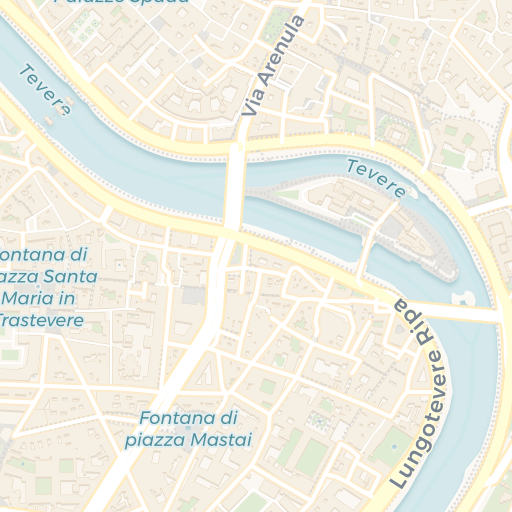
And trace the wall. The reference work gives its line precisely: from Ponte Fabricio to the Portico d'Ottavia, along today's Via del Portico d'Ottavia — excluding the ancient fish market — bending at Piazza Giudea, which it cut in two, then along Vicolo Cenci, today Via del Progresso, back to the Tiber. You can walk the whole perimeter in twenty minutes.
Skip it if you:
- Expect a monument. The absence of buildings is the historical fact, not a disappointment.
- Are only here to eat. The restaurants are good and they are not what the quarter is.
- Arrive on a Saturday. The museum states it is closed on Saturdays and during Jewish festivals, so the ticketed half of the visit is shut.
Quick facts
- Type: Historic Place, Neighborhood
- Visitor access: Open to visitors
Visit responsibly
This is an inhabited quarter of a living community, not a memorial site. The Jewish community of Rome is probably the oldest in the world outside the Middle East, with a continuous existence from classical times down to the present day. People live, work and worship here now.
The synagogue is reached through the museum and visited with a guide. That is how the ticket is structured — entry to the Tempio Maggiore with a guided visit — and it is a working place of worship with security, not a monument you wander into.
Photograph the streets, not the residents. The narrow lanes mean doorways are close to the pavement, and a quarter this small cannot absorb being treated as a set.
Understand what you are walking on before commenting on it. The bull of 1555 revoked all political and social rights, barred Jews from practising medicine or law, and required worshippers to hear Catholic sermons denouncing their faith and to participate in Catholic rituals during the Jewish sabbath; life inside was one of crushing poverty, with Roman Jews allowed to work only at unskilled jobs. The quarter's cheerfulness today is not a reason to treat the history lightly.
Spend in the quarter. The restaurants along the main street belong to the neighbourhood that the museum, the synagogue and the history all serve.
Where it is
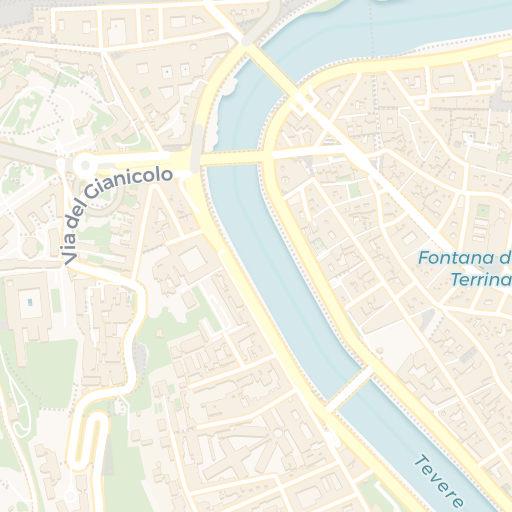
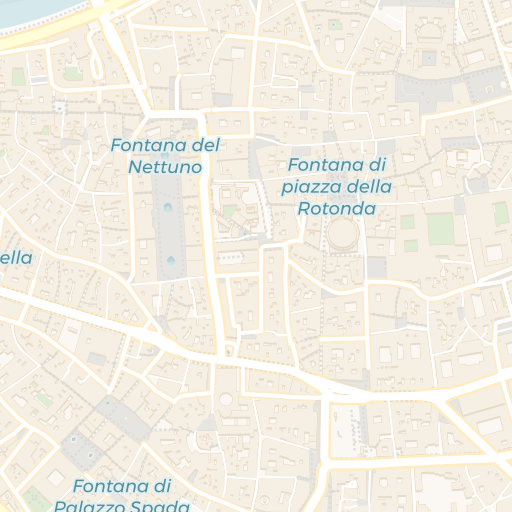
Get directions Open in Apple Maps
© OpenStreetMap contributors · © CARTO · 41.89381, 12.47781
Plan your visit
The quarter is free. The museum and synagogue are one ticket.
Walking the former ghetto costs nothing — it is an ordinary group of public streets. What is ticketed is the Museo Ebraico di Roma, and the thing to know is that the same ticket covers the Tempio Maggiore.
Tickets
- Full — EUR 12.00
- Students up to 25 — EUR 6.00, with a document from the school or university proving enrolment for the current year
- Under agreements — EUR 10.00
- Free — children under 10, and all visitors with a disability certificate above 74 per cent, with free admission extended to a companion where the visitor is not self-sufficient
A service commission is added if the ticket is booked online. Free tickets for visitors with disabilities and their companions cannot be booked online — those are arranged with the museum directly.
What the ticket includes
The museum states it covers the visit of the museum with a free audioguide, delivered by QR code to your own mobile device in Italian, English, Hebrew, Spanish, German, Russian and French, and entry to the Tempio Maggiore with a guided visit. Two sites, one price.
Opening hours, and they move four times a winter
Summer, 1 April to 30 September — Sunday to Thursday 10.00–18.00 (last entry 17.15), Friday 10.00–16.00 (last entry 15.15).
Winter is published in four separate bands: 1–26 October and 9 February–31 March, Sunday to Thursday 10.00–17.00 (last entry 16.15); 27 October–9 November and 12 January–8 February, 10.00–16.30 (last entry 15.45); 10 November–11 January, 10.00–16.00 (last entry 15.15). Friday through the winter is 9.00–14.00, last entry 13.15.
Closed Saturdays
The museum states plainly that it is closed on Saturdays and during Jewish festivals, and publishes a calendar of those closures. It also warns that any variations will be communicated on its site and social pages. For a visit built around the museum and the synagogue, that is the first thing to check.
Seeing the quarter itself
The museum describes a walk led by its educators running from Lungotevere de' Cenci to the Church of San Gregorio and Largo XVI Ottobre, by way of Via del Portico d'Ottavia, Via della Reginella, Piazza delle Cinque Scole and Largo Stefano Gaj Taché. That is the route to walk whether or not you take it with a guide.
How long
Two hours for the museum, the synagogue and a walk of the perimeter — longer with the reconstruction.
Verified against Museo Ebraico di Roma, October 2026.
When to visit
Come on a weekday morning and do the museum before the streets. The quarter itself is open at every hour, but the Museo Ebraico di Roma and the Tempio Maggiore are the ticketed half of the visit, and seeing the museum first makes the walk afterwards mean something it otherwise will not.
Saturday rules the week out, and the museum says so. It is closed on Saturdays and during Jewish festivals, and publishes a calendar of those closures. This is a living Jewish quarter, not a preserved one: a Saturday visit is a visit to a community observing a day of rest, with the ticketed half of the site shut.
Check which winter band you are in. The museum publishes four different winter timetables: closing at 17.00 from 1 to 26 October and from 9 February to 31 March, at 16.30 from 27 October to 9 November and from 12 January to 8 February, and at 16.00 from 10 November to 11 January. Last entry is 45 minutes before each. In summer, 1 April to 30 September, it runs to 18.00.
Evening is when the main street is busiest, because the restaurants along Via del Portico d'Ottavia fill. If you came for the quarter rather than for dinner, come earlier; if you came for both, the order is museum, perimeter, table.
Book ahead for the discounts, but not for the free places. Online booking adds a service commission, and the museum states that free tickets for visitors with disabilities and their companions cannot be booked online — those are arranged directly.