

Ponte Sisto
Last updated on October 4, 2026Why visit Ponte Sisto
The draw
The hole in the middle is one of the best pieces of engineering reasoning in Rome, and nobody notices it. The reference work explains the oculus — the eye lightening the masonry of the central spandrel — as erected to diminish the river's pressure on the bridge in case of flood. A bridge built with a hole through it so the river can pass through rather than push against — on a site where the Tiber had already taken out the previous bridge. Turismo Roma records that predecessor as gravely compromised by the flood of 792 and known as Ponte Rotto, the broken bridge, for seven centuries.
And it is a crowd-control measure from 1475. The reference work records, from Creighton's History of the Papacy, that Sixtus IV was mindful of the disaster of the Jubilee of 1450 caused by crowding on the Bridge of Sant'Angelo, then the only available means of communication with Saint Peter's. This bridge exists because people were crushed to death on another one. The same account says it was built of blocks from the Colosseum.
The friction
There is nothing to do here. It is a five-minute stop, not a visit, and at night the Trastevere end is one of the busiest drinking spots in the city, which is a very different experience from the one the bridge is good for.
The tactic
Go and look over the upstream parapet at the oculus, then walk round to the embankment to see it in profile. From on top of the bridge the opening is invisible — you have to be beside or below it. Going down to the riverside walk is the only way to see the thing the bridge is famous among engineers for.
And read the argument about the architect. The reference work says Sixtus IV commissioned the bridge from the architect Baccio Pontelli. Turismo Roma says the identification of the author remains unresolved, and that the Vasarian attribution to Pontelli has fallen because he reached Rome only after the bridge was built. One of the most-used bridges in Rome has no agreed designer, and the reason is a travel date.
Skip it if you:
- Want a monument. It is a plain pedestrian bridge whose interest is almost entirely in why it is shaped as it is.
- Dislike crowds at night. The Trastevere end is a nightlife bottleneck after dark.
- Cannot get down to the embankment. The oculus is not visible from the deck.
Quick facts
- Type: Historic Place, Bridge
- Visitor access: Open to visitors
- Admission: Free
Visit responsibly
The inscriptions here were taken off the bridge because of vandalism. The reference work records the two marble slabs removed in the 1990s after continued vandalism, with copies on the left bridge head; Turismo Roma gives the removal as a conservation measure with the texts transcribed on the new parapets. Either way, what is on the bridge now stands in for something that could not be left there safely.
The parapets are twenty-five years old. The 2000 restoration by Gaetano Miarelli Mariani made new parapets incorporating original travertine elements. Sitting on them, chaining to them and sticking things to them all tell on stone that is partly 15th century.
It is a pedestrian bridge in a residential crossing. People live at both ends and use this as a route, not a view. At the Piazza Trilussa end the noise of a late evening carries straight into flats.
Do not climb to the oculus. It is a structural opening in the spandrel above the river, not a feature to get into, and it is doing a job — diminishing the river's pressure on the bridge in case of flood.
Where it is
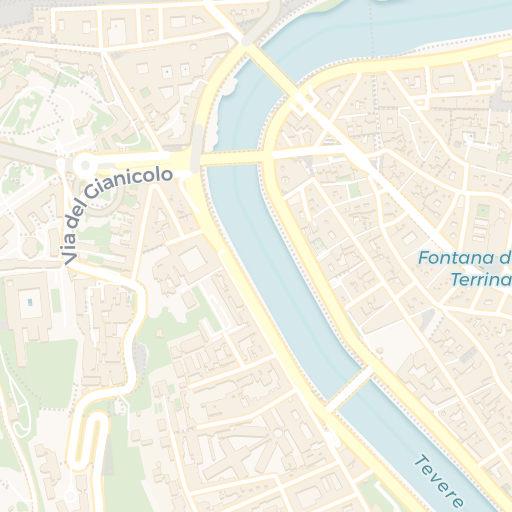
Get directions Open in Apple Maps
© OpenStreetMap contributors · © CARTO · 41.89234, 12.47075
Plan your visit
Admission: Free · Public pedestrian bridge
Free, open, and closed to cars
Ponte Sisto is a public bridge. Turismo Roma publishes no admission price and no opening hours for it, and the reference work records that traffic on the bridge is restricted to pedestrians — which is why it is a pleasant crossing rather than a kerb.
What it connects
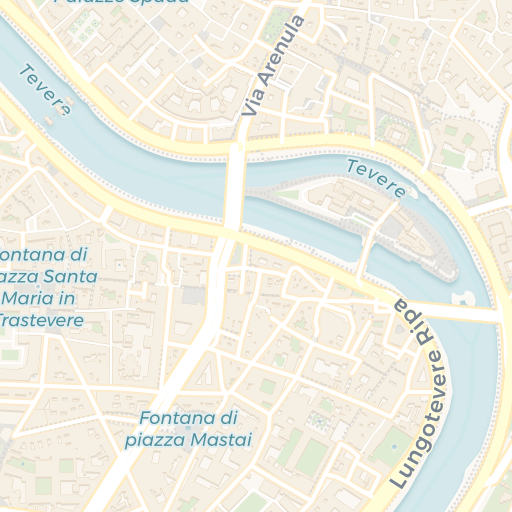
Via dei Pettinari, in the Rione of Regola, to Piazza Trilussa in Trastevere. Turismo Roma records that it was built to allow direct communication between Piazza Trilussa and the Vatican with the rest of the city — which is still what it is for.
What to actually do here
Go down to the embankment. The oculus — the circular opening through the central spandrel — cannot be seen from the deck. It is the one reason this bridge is interesting, and seeing it means getting below or beside the structure.
From the bridge itself, Turismo Roma singles out the postcard backdrop in which the Dome of Saint Peter's can be made out.
Cost
Nothing. There is no ticket and no gate.
How long
Ten minutes, or five if you do not go down to the river.
Verified against Turismo Roma, October 2026.
When to visit
Early morning or late afternoon, for the view rather than the bridge. Turismo Roma's postcard backdrop with the Dome of Saint Peter's is a westward view downriver, so the end of the day gives you the dome against the light and the start of it gives you the dome lit by it.
Avoid the evening if the bridge is the point. The Trastevere end opens onto Piazza Trilussa, which after dark is one of the busiest drinking spots in the city, and the crossing becomes a corridor of people moving in one direction with buskers in the middle of it.
Any hour works for the structure. It is a public pedestrian bridge with no gate and no closing time, so the oculus is visible from the embankment whenever there is light.
It is a connector, not a destination. The natural time to be here is on the way between the historic centre and Trastevere — which is exactly the journey Sixtus IV built it for in 1475.