

Piazza della Cisterna
Last updated on October 14, 2026Why visit Piazza della Cisterna
This is the square that explains what San Gimignano actually was. The famous skyline is best understood not from a distance but from inside this triangular space, where the towers stand around you at the distance they were really built at — close, competitive, and leaning over a market place.
Everything here is dated and legible. The cistern beneath it dates from 1287 and gave the square its name; the travertine well-head was enlarged in 1346 under the podestà Guccio Malavolti; and parts of the herringbone brick paving go back to the 13th century. Round the edges stand the Becci and Cugnanesi towers over an old city gate, the twin Ardinghelli towers, and the torre del Diavolo.
The friction is the time of day rather than the price — it is free and never closes, but between about 11:00 and 16:00 in season it is as crowded as anywhere in Tuscany. Come at first light or after six, when the coaches have gone and the square belongs to the town again.
Quick facts
- Type: Square/Plazza, Historic Place
- Local name: Piazza della Cisterna (vedi la pagina italiana)
- Built: Present arrangement from the 13th century; cistern 1287, well-head enlarged 1346
Visit responsibly
Do not sit on the well-head. It is the monumental travertine covering of a cistern of 1287, enlarged in 1346, and it is the single most-touched object in San Gimignano. It has no barrier and no attendant, which is exactly why the restraint has to come from visitors: travertine is a soft stone and it is being worn by people climbing on it for photographs.
Come at the edges of the day. This is the most effective thing any visitor can do here. The square is small, triangular and sloping, it has no capacity management because it needs no ticket, and the entire day-trip population passes through it between late morning and late afternoon. Shifting your visit by two hours in either direction materially reduces the pressure on the space.
Keep the passage to Piazza del Duomo clear. The two squares connect through a single open gap, and it is the pinch point of the whole historic centre. Groups stopping to regather in it block the main pedestrian flow of the town.
Spend money on this square rather than just photographing it. The buildings around it are shops, bars and houses, and the businesses on the square and in the lanes immediately off it are the ones carrying the cost of the visitor volume. Buying a coffee here is not a trivial act of support.
Remember people live behind those facades. Casa Salvestrini, palazzo Razzi, palazzo Tortoli and the rest are private buildings, not exhibits. Doorways are doorways, and the towers are not open because they are someone's home.
Where it is
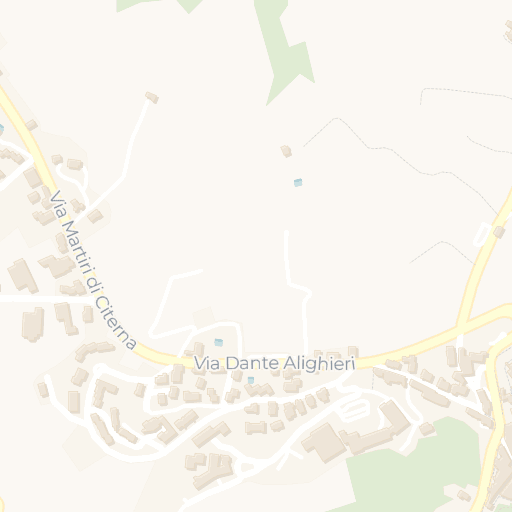
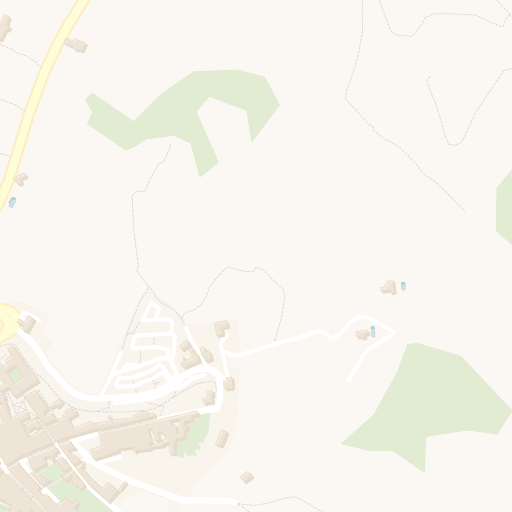
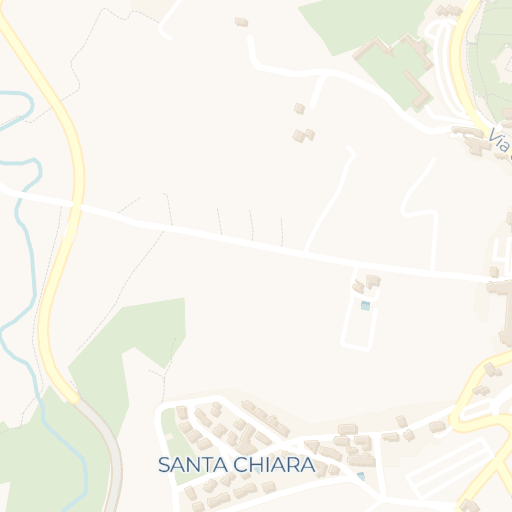
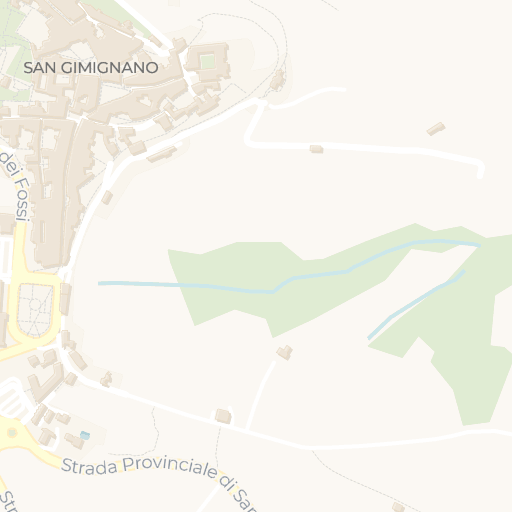
Get directions Open in Apple Maps
© OpenStreetMap contributors · © CARTO · 43.46742, 11.04365
Plan your visit
Piazza della Cisterna is a public square. There is no gate, no operator, no ticket and no closing time — you can walk into it at any hour, and the best hours are the earliest and the latest. Everything on this page can be seen for nothing.
What is not free is the inside of the ticketed sites a minute's walk away, and those prices are worth knowing before you set off:
- The civic museums ticket — €10,00 full, €8,00 reduced, plus a €1,00 booking fee, valid one day — covers the Palazzo Comunale with the Pinacoteca and the Torre Grossa, the Complesso di Santa Chiara and the Chiesa di San Lorenzo in Ponte. Hours are 10:00–19:30 from 1 April to 31 October, 11:00–17:30 from 1 November to 31 March, and 10:30–18:30 from 26 December to 6 January; closed 25 December.
- The Complesso della Collegiata is separate — €7,00 full, €6,00 for groups of at least twenty, €4,00 reduced.
The practical advice for standing here
Walk the square in order rather than photographing the well. Start at the arco dei Becci at the southern end, work round past palazzo Razzi, Casa Salvestrini and palazzo Tortoli with its truncated tower, then the northern side with the torre del Diavolo, and finish on the western side under the twin Ardinghelli towers. It takes ten minutes and converts a photo stop into an understanding of the town.
Then climb the Torre Grossa, which is on the neighbouring square and gives you the view down onto everything you have just walked round.
Verified against Musei di San Gimignano (Opera Laboratori), October 2026.
When to visit
Early morning or after six in the evening. That is the whole recommendation for this square, and it matters more than the season. Between roughly 11:00 and 16:00 from April to October the Florence–Siena coach loop fills the two squares, and a triangular space this size takes it badly.
April to early June and late September to October are the best months — warm, long evenings, and the light low enough across the towers to show their height.
July and August are the busiest and the hottest, but the square is unenclosed and always open, so the early-and-late strategy works even in peak season: at 07:00 in August this is a quiet Tuscan square with a well in it.
November to March is the quietest and cheapest time to be in San Gimignano, and the square is entirely unaffected by the shortened winter opening hours that constrain the museums, because it has none. Cold, low light on the brick and almost nobody in it is arguably the best version of the place.