

Corso del Popolo
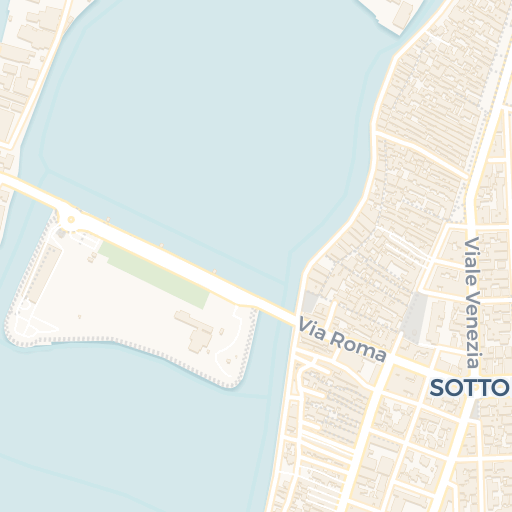
Last updated on November 15, 2026The Corso del Popolo is the spine of Chioggia: a single broad, straight, arcaded street running the length of the island from the cathedral at one end to Ponte Vigo and the lagoon at the other.
Running parallel to it, one block east, is the canal Vena, lined with moored fishing boats. The town is built on that pairing -- a street for people and a canal for boats -- and everything else branches off it in narrow lanes called calli.
It is where Chioggia does everything: the market, the passeggiata, the cafés, and the fish.
Challenge to visitors
The street is the town, and that is easy to underrate. Chioggia is built as one artery with everything hung off it — arriving expecting a piazza and a set of monuments misreads the plan entirely.
The interesting part is at right angles. The calli running off the Corso towards the canals are where the fishing town actually is; stay on the Corso and you have walked past it.
And nothing on it publishes an hour. The church of San Francesco, the tempietto di San Martino and the clock tower all open off this street, and neither the municipality nor its tourism portal publishes opening times for any of them.
Visiting tips and strategy
When to go
Early morning is the best time: the fish market is working, the boats are in on the Vena, and the street belongs to the town rather than to visitors.
Evening brings the passeggiata under the arcades, which is the other time the Corso is at its best.
Spring and autumn are the pleasant seasons; in July and August the beach crowds cross over from Sottomarina and the street gets busy in the middle of the day.
Winter is quiet, damp and atmospheric, and the town feels entirely like itself.
Getting the good version
Walk the Corso once, then walk the calli. Turn off at right angles wherever you can — the canals, the moored boats and the working town are a few metres away and invisible from the main street.
Look for the octagonal dome. The tempietto di San Martino is Venetian Gothic and small enough to miss entirely between the shopfronts.
Go into San Francesco. Built in the fifteenth century and restored in the eighteenth with heavy stucco and decoration, it is the one interior on the Corso that rewards stepping inside.
Early evening is the hour. The Corso is where Chioggia walks, and a fishing town at the end of the working day is the version worth seeing.
What it costs
Nothing. A public street, open at every hour, with arcades that are public passage.
Nothing that opens off it is ticketed on any published source: the municipality's own places register lists the town's civic sites — the frazioni, the Torre Santa Maria and Torre Sant'Andrea, the Teatro Cinema Don Bosco, the Sottomarina beach — and Corso del Popolo is not among them as a timed or charged place.
The churches on it are free, and the diocese publishes no admission for any of Chioggia's eleven historic churches.
Verified against Comune di Chioggia, November 2026.
Getting there and getting in
Admission: Free
Hours and admission
A public street, at all hours, free.
What it is
The main artery of the old town, running its full length, with arcades and the calli dropping away towards the canals.
What opens off it
The tempietto di San Martino, with an octagonal dome in Venetian Gothic; the church of San Francesco, built in the 1400s and restored in the 1700s with rich stucco and decoration; the Cathedral of Santa Maria Assunta by Baldassare Longhena; and the Torre dell'orologio, which the municipality says holds the world's oldest working tower clock.
Note
Chioggia's Torre dell'orologio is its own building — not the Torre dell'Orologio of Venice, Padua, Feltre or Noale.
How long
Half an hour for the Corso; an hour with the calli.
Verified against Visit Chioggia (Comune di Chioggia), November 2026.
Place accessibility
Chioggia is flat and the Corso is its level spine. The old town is built on the level between its canals, and the main street runs its whole length without a climb — which in a lagoon town is worth saying plainly, because the alternative here is bridges.
The arcades along it give a sheltered route out of sun and rain for stretches of both sides.
The calli are the harder half. The lanes running off towards the canals are narrow and cross water, so the part of the town most worth seeing is the part least likely to be level throughout.
Not published, and not guessed: the paving, whether the arcades step up from the roadway, accessible parking near the old town, or the crossings over the canals. Neither the municipality nor its tourism portal publishes access information for the street.
Quick facts
- Type: Street/Avenue
- Local name: Corso del Popolo (vedi la pagina italiana)
- Admission: Free
- A street and a canal, in parallel: The Corso runs one block west of the canal Vena, so a house could be served by cart on one side and boat on the other.
- Goldoni wrote it down: Carlo Goldoni set Le baruffe chiozzotte (1762) among the people of this street, and wrote it in Chioggia’s own dialect.
Where it is

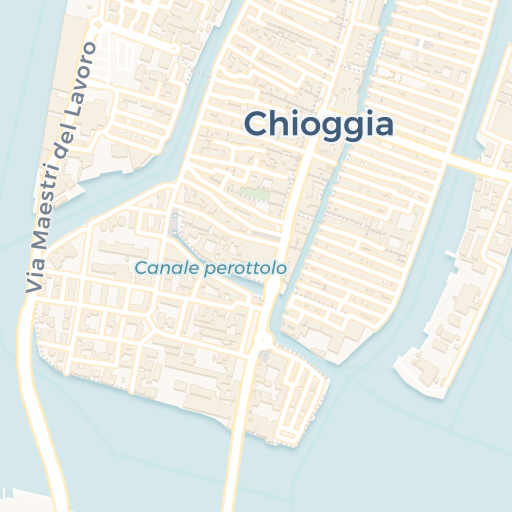
Get directions Open in Apple Maps
© OpenStreetMap contributors · © CARTO · 45.2183, 12.2786
Visit responsibly
This is a working street in a working town rather than a tourist quarter, and the fishing quay along the Vena is a workplace. Keep clear of the boats and the handling of catch.
Chioggia's summer pressure comes in a daily wave from the Sottomarina beaches and concentrates on this one street between about eleven and four. Coming early, late or out of season is better for everyone.
Buy the fish. This is one of the Adriatic's major landing ports, and eating what is landed here -- rather than what is on a tourist menu -- is the most direct support the town's own economy gets.